Code with Mosh – Claude Code for Professional Developers


Free Download Code with Mosh – Claude Code for Professional Developers
Released 3/2026
MP4 | Video: h264, 1920×1080 | Audio: AAC, 44.1 KHz, 2 Ch
Genre: eLearning | Language: English | Duration: 120 Lessons ( 8h 57m ) | Size: 2.2 GB
Build and deploy production-grade apps with AI – no vibe coding

AI coding tools are everywhere – but most developers are using them wrong.
Copying AI-generated code without reviewing, testing, or understanding it – that’s vibe coding. It works for demos. It falls apart in production.
This course is different.
In Claude Code for Professional Developers, I’ll show you how to use Claude Code the right way – to ship production-grade apps faster, with better code quality, and without sacrificing the engineering principles that make software maintainable.
We’ll build a real AI-powered customer support system from scratch, covering everything from planning and authentication to AI features, testing, and deployment.
What you’ll learn
Set up and configure Claude Code for professional development workflows
Use Plan Mode, subagents, and Model Context Protocol (MCP) effectively
Create custom tools and skills to extend Claude Code
Build a full-stack app with React, Express, Prisma, and PostgreSQL
Implement authentication with role-based access control
Write unit tests and end-to-end tests with Playwright
Integrate AI features into your applications with Vercel AI SDK
Set up email integration for receiving and sending emails
Dockerize and deploy your app to production
Automate workflows with GitHub Actions
What You’ll Build
AI-Powered Customer Support System: Build a full-stack customer support ticketing app powered by AI. You’ll start from scratch – planning the project, setting up authentication, and implementing full CRUD for users and tickets. Then you’ll layer in AI features: polishing replies, summarizing tickets, classifying issues, and auto-resolving common requests with background job processing. The app also includes email integration (receiving and sending), a real-time dashboard, and is fully deployed to production with Docker and Railway.
Homepage

Claude Code for Professional Developers
Learn to build and ship production-grade apps with Claude Code. Master AI-assisted development, clean architecture, testing, and deployment – no vibe coding.

Code:Copy to clipboard

DDownload
https://ddownload.com/6r2i8o8520ea/ljlmv.Code.with.Mosh..Claude.Code.for.Professional.Developers.part1.rar
https://ddownload.com/rcgwtmswl4ny/ljlmv.Code.with.Mosh..Claude.Code.for.Professional.Developers.part2.rar
https://ddownload.com/yk0zha0ewoz0/ljlmv.Code.with.Mosh..Claude.Code.for.Professional.Developers.part3.rar
Rapidgator
https://rg.to/file/50b1337667487b67d051e24ebafd8b1d/ljlmv.Code.with.Mosh..Claude.Code.for.Professional.Developers.part1.rar.html
https://rg.to/file/073aac708f2822100bc84a557019d793/ljlmv.Code.with.Mosh..Claude.Code.for.Professional.Developers.part2.rar.html
https://rg.to/file/e6677f73b6c4461b698a556744ba1946/ljlmv.Code.with.Mosh..Claude.Code.for.Professional.Developers.part3.rar.html
AlfaFile Free Download
https://alfafile.net/file/A4S7c/ljlmv.Code.with.Mosh..Claude.Code.for.Professional.Developers.part1.rar
https://alfafile.net/file/A4S7i/ljlmv.Code.with.Mosh..Claude.Code.for.Professional.Developers.part2.rar
https://alfafile.net/file/A4S7N/ljlmv.Code.with.Mosh..Claude.Code.for.Professional.Developers.part3.rar
FreeDL (Friendly Host)
https://frdl.io/eh8zp7jxhk4h/ljlmv.Code.with.Mosh..Claude.Code.for.Professional.Developers.part1.rar.html
https://frdl.io/6ccwk208ck9h/ljlmv.Code.with.Mosh..Claude.Code.for.Professional.Developers.part2.rar.html
https://frdl.io/9837wiipzk83/ljlmv.Code.with.Mosh..Claude.Code.for.Professional.Developers.part3.rar.html

No Password – Links are Interchangeable

Cluster Setup for CKS


Cluster Setup for CKS
Duration: 1h 23m | .MP4 1920×1080 30 fps(r) | AAC, 48000 Hz, 2ch | 219.09 MB
Genre: eLearning | Language: English​

Learn how to securely configure Kubernetes clusters using network policies, CIS benchmarks, TLS-enabled Ingress, and more. This course prepares you with the essential skills for the CKS certification.

More Info:
Cluster Setup for CKS


Cluster Analysis : Unsupervised Machine Learning In Python


Cluster Analysis : Unsupervised Machine Learning In Python
Published 7/2022
MP4 | Video: h264, 1280×720 | Audio: AAC, 44.1 KHz
Language: English | Size: 197.17 MB | Duration: 0h 47m​

A Quick Way to Learn and Implement Clustering Algorithms for Pattern Recognition in Python. A Course for Beginners.

What you’ll learn
Describe the input and output of a clustering model
Prepare data with feature engineering techniques
Implement K-Means Clustering, Hierarchical Clustering, Mean Shift Clustering, DBSCAN, OPTICS and Spectral Clustering models
Determine the optimal number of clusters
Use a variety of performance metrics such as Silhouette Score, Calinski-Harabasz Index and Davies-Bouldin Index.
Requirements
Basic knowledge of Python Programming
Description
Artificial intelligence and machine learning are touching our everyday lives in more-and-more ways. There’s an endless supply of industries and applications that machine learning can make more efficient and intelligent. You have probably come across Google News, which automatically groups similar news articles under a topic. Have you ever wondered what process runs in the background to arrive at these groups? Unsupervised machine learning is the underlying method behind a large part of this. Unsupervised machine learning algorithms analyze and cluster unlabeled datasets. These algorithms discover hidden patterns or data groupings without human intervention. This course introduces you to one of the prominent modelling families of Unsupervised Machine Learning called Clustering. This course provides the learners with the foundational knowledge to use Clustering models to create insights. You will become familiar with the most successful and widely used Clustering techniques, such as:K-Means ClusteringHierarchical ClusteringMean Shift ClusteringDBSCAN : Density-Based Spatial Clustering of Applications with NoiseOPTICS : Ordering points to identify the clustering structureSpectral ClusteringYou will learn how to train clustering models to cluster and use performance metrics to compare different models. By the end of this course, you will be able to build machine learning models to make clusters using your data. The complete Python programs and datasets included in the class are also available for download. This course is designed most straightforwardly to utilize your time wisely. Get ready to do more learning than your machine!Happy Learning.Career Growth:Employment website Indeed has listed machine learning engineers as #1 among The Best Jobs in the U.S., citing a 344% growth rate and a median salary of $146,085 per year. Overall, computer and information technology jobs are booming, with employment projected to grow 11% from 2019 to 2029.

Overview

Section 1: Introduction

Lecture 1 Introduction

Lecture 2 Artificial Intelligence

Lecture 3 Machine Learning

Lecture 4 Supervised Learning

Lecture 5 Supervised Learning: Classifications

Lecture 6 Supervised Learning: Regressions

Lecture 7 Unsupervised Learning

Lecture 8 Unsupervised Learning : Clustering

Lecture 9 Installation of Python Platform

Section 2: Building and Evaluating Clustering ML Models

Lecture 10 Important Terminologies

Lecture 11 K-Means Clustering

Lecture 12 Hierarchical Clustering

Lecture 13 Silhouette Score

Lecture 14 Calinski-Harabasz Index (Variance Ratio Criterion)

Lecture 15 Davies-Bouldin Index

Lecture 16 Mean Shift Clustering

Lecture 17 DBSCAN : Density Based Spatial Clustering of Applications with Noise

Lecture 18 OPTICS : Ordering points to identify the clustering structure

Lecture 19 Spectral Clustering

Beginners starting out to the field of Machine Learning.,Industry professionals and aspiring data scientists.,People who want to know how to write their clustering code.


Cloud Native Twelve-Factor and Fifteen-Factor Applications


Cloud Native Twelve-Factor and Fifteen-Factor Applications
.MP4, AVC, 1280×720, 30 fps | English, AAC, 2 Ch | 57m | 296 MB
Instructor: Frank P Moley III​

The twelve-factor and fifteen-factor methodology helps you build more effective, software-as-a-service apps. It allows for automation, continuous deployment, easy onboarding, and portability between execution environments. By leveraging these methodologies, you can also achieve straightforward deployment on numerous cloud platforms in any language, as well as high scalability without needing to change your tooling, architecture, or team.

In this course, join instructor Frank Moley as he walks through the fifteen most important factors for software developers looking to build agile, scalable, and resilient web apps. Along the way, Frank explains exactly how each factor applies to cloud-native development, sharing key pointers, pro tips, and practical strategies for making a legacy application twelve- or fifteen-factor compatible.

More Info

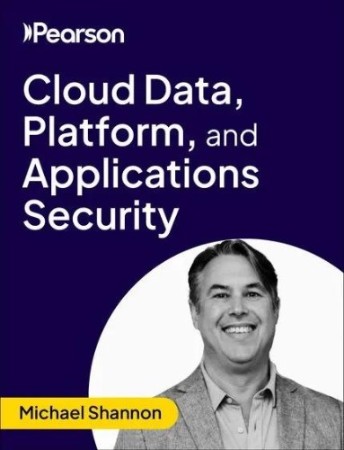
Cloud Data, Platform and Applications Security


Cloud Data, Platform and Applications Security
Published 08/2025
MP4 | Video: h264, 1280×720 | Audio: AAC, 44.1 KHz, 2 Ch
Language: English | Duration: 5h 20m | Size: 1.35 GB​

This comprehensive cloud security course provides expert training to protect every layer of the cloud environment. You will learn how to secure cloud data throughout its entire lifecycle-from creation and storage to usage, sharing, archiving, and destruction. Gain practical skills in data classification, data obfuscation, and key and certificate management to enforce strong data security policies and maintain compliance.

You will explore cloud platform and infrastructure security, including designing secure physical data centers, network architectures, virtualization, cloud compute and storage components, and management planes. Learn to identify vulnerabilities, mitigate risks, and develop effective business continuity and disaster recovery plans to ensure resilient cloud operations.

The course also covers essential cloud application security topics such as secure software development lifecycles (SDLC), threat modeling, OWASP API security, secure coding techniques, and managing third-party software risks. You will master cloud identity and access management (IAM) solutions such as federated identity, single sign-on (SSO), multi-factor authentication (MFA), cloud access security brokers (CASBs), and secrets management to safeguard access and protect sensitive resources.

About the Instructors

Michael J Shannon began his IT career when he transitioned from recording studio engineer to network technician for a major telecommunications company in the early 1990’s. He soon began to focus on security and was one of the first 10 people to attain the HIPAA Certified Security Specialist. Throughout his 30 years in IT, he has worked as an employee, contractor, and consultant for several companies including Platinum Technologies, Fujitsu, IBM, State Farm, MindSharp, Thomson, Pearson, and Skillsoft among others. Mr. Shannon has authored several books, training manuals, blog articles, and CBT modules over the years as well. He has attained the CISSP, ITIL 4 Managing Professional, CCNP Security, Palo Alto PCNSE7 and OpenFAIR certifications in the security field as well as several cloud-based certifications for AWS, Google Cloud, and Azure. His hobbies are playing guitar, songwriting, and golf. He resides with his wife in Abilene Texas.

Cloud Computing Fundamentals for Beginners (2026)


Free Download Cloud Computing Fundamentals for Beginners (2026)
Published 4/2026
Created by Vedika Singh
MP4 | Video: h264, 1920×1080 | Audio: AAC, 44.1 KHz, 2 Ch
Level: All Levels | Genre: eLearning | Language: English | Duration: 31 Lectures ( 4h 47m ) | Size: 1.35 GB

Learn Cloud Computing Fundamentals, Architecture, Networking, Virtualization & Service Models
What you’ll learn
✓ Understand the fundamentals of cloud computing and how cloud systems work
✓ Explain cloud architecture, networking, and virtualization concepts
✓ Identify different types of cloud computing and service models (IaaS, PaaS, SaaS)
✓ Understand cloud migration and its business impact
✓ Describe cloud characteristics, components, advantages, and challenges
✓ Understand cloud layers and reference models
✓ Gain knowledge of popular cloud platforms and their use cases
Requirements
● No prior knowledge of cloud computing is required
● Basic understanding of computers and the internet is helpful
● Willingness to learn cloud computing concepts from scratch
Description
Cloud Computing Fundamentals | Basics of Cloud Computing
Learn the fundamentals of cloud computing and essential cloud computing basics and build a strong understanding of how modern cloud systems work. This beginner-friendly course covers essential cloud computing basics, helping you understand how data is stored, processed, and managed in cloud environments.
What You Will Learn
• Introduction to Cloud Computing
• Characteristics, Components, Advantages, and Challenges
• Cloud Migration and Its Business Impact
• Cloud Networking and Architecture
• Cloud Layers and Reference Models
• Types of Cloud Computing
• Cloud Service Models
• Virtualization in Cloud Computing
• Overview of Popular Cloud Platforms
Course Overview
• Understand core cloud computing fundamentals
• Learn how cloud systems work in real-world environments
• Explore cloud architecture, networking, and virtualization
• Gain clarity on cloud types and service models
• Build a solid conceptual foundation for advanced cloud technologies
Why Take This Course
• Covers all core cloud computing fundamentals
• Beginner-friendly and easy to understand
• Structured and focused learning approach
• Updated for 2026
Why Learn Cloud Computing
• One of the most in-demand skills in IT
• Builds a strong foundation for cloud and DevOps careers
• Helps understand modern data storage and processing systems
• Supports long-term growth in evolving technology domains
Start your journey into cloud computing fundamentals and build a strong foundation for a career in modern IT.
Who this course is for
■ Beginners who want to learn cloud computing fundamentals from scratch
■ Students and graduates interested in starting a career in IT or cloud computing
■ IT professionals looking to understand cloud concepts, architecture, and networking
■ Developers and engineers who want a strong foundation in cloud computing and virtualization
■ Business professionals interested in cloud technology and its business impact
Homepage
Code:Copy to clipboard

https://www.udemy.com/course/easy-cloud-basics


Code:Copy to clipboard

DDownload
https://ddownload.com/du2641p996uj/iyuug.Cloud.Computing.Fundamentals.for.Beginners.2026.part1.rar
https://ddownload.com/mj5qjm982eai/iyuug.Cloud.Computing.Fundamentals.for.Beginners.2026.part2.rar
Rapidgator
https://rg.to/file/29117011dc38200739b546c39c361e40/iyuug.Cloud.Computing.Fundamentals.for.Beginners.2026.part1.rar.html
https://rg.to/file/508db5d2a0d4d528082e406faacba342/iyuug.Cloud.Computing.Fundamentals.for.Beginners.2026.part2.rar.html
AlfaFile Free Download
https://alfafile.net/file/A4FaK/iyuug.Cloud.Computing.Fundamentals.for.Beginners.2026.part1.rar
https://alfafile.net/file/A4FaY/iyuug.Cloud.Computing.Fundamentals.for.Beginners.2026.part2.rar
FreeDL (Friendly Host)
https://frdl.io/32tyavx0necj/iyuug.Cloud.Computing.Fundamentals.for.Beginners.2026.part1.rar.html
https://frdl.io/32h0i8bmeusy/iyuug.Cloud.Computing.Fundamentals.for.Beginners.2026.part2.rar.html

No Password – Links are Interchangeable

Clinical Research Skill-Building with AI


Free Download Clinical Research Skill-Building with AI
Published 3/2026
MP4 | Video: h264, 1280×720 | Audio: AAC, 44.1 KHz, 2 Ch
Language: English | Duration: 3h 49m | Size: 2.44 GB
Clinical Digital and AI Literacy, Automation, and Career Advancement.

What you’ll learn
Master AI Prompt Engineering: Write clear, structured AI prompts to automate daily clinical research tasks and save hours on routine documentation.
Implement AI-Assisted Writing: Generate GCP-aligned emails, monitoring notes, and safety narratives using GenAI tools like ChatGPT and Claude.
Apply RBQM & Data Analytics: Use AI for risk-based quality management, anomaly detection, and identifying patterns in complex clinical datasets.
Future-Proof Your Clinical Career: Build an AI-ready resume and master the digital literacy needed for high-demand roles in modern clinical operations.
Requirements
Foundational Clinical Knowledge: A basic understanding of the clinical trial lifecycle (Phase 1-4) and ICH-GCP guidelines is recommended to apply AI contextually
No Technical Coding Required: You do not need experience in Python, R, or data science; the course focuses on user-friendly AI interfaces.
Standard Computing Setup: A laptop or desktop with a reliable internet connection is essential for accessing cloud-based AI platforms
AI Tool Access: Learners should have (or be willing to create) free accounts for Generative AI tools like ChatGPT, Claude, or Google Gemini.
Critical Thinking Skills: A willingness to question and verify AI-generated outputs is vital, as human oversight remains mandatory in clinical research.
Adaptability: A growth mindset is encouraged to navigate the rapid shift from manual processes to AI-augmented workflows.
Description
Unlock the future of clinical operations with Clinical Research Skill-Building with AI: Digital Literacy, Automation, and Career Advancement. This masterclass is specifically designed to bridge the critical gap between traditional ICH-GCP guidelines and cutting-edge Generative AI technologies. Tailored for CRAs, CRCs, and Study Coordinators, the curriculum targets operational "pain points" like recruitment delays and heavy documentation burdens through high-efficiency AI integration.
Participants gain hands-on experience in Prompt Engineering for Clinical Research, learning to automate monitoring notes, safety narratives, and site correspondence without compromising compliance. The course dives deep into high-impact domains, including Risk-Based Quality Management (RBQM), automated data anomaly detection, and the evolution of AI within decentralized clinical trials. Beyond technical automation, we emphasize Executive Presence and professional communication, empowering you to lead digital transformation initiatives within your organization.
Expanded Learning Objectives
• Master AI Prompt Engineering: Develop the ability to craft structured, context-aware prompts to automate daily clinical tasks and streamline routine study documentation.
• Implement AI-Assisted Writing: Learn to generate GCP-aligned emails, monitoring logs, and complex regulatory summaries using professional GenAI tools.
• Apply RBQM & Data Analytics: Leverage AI for advanced signal detection, identifying Key Risk Indicators (KRIs), and cleaning intricate clinical datasets for improved trial integrity.
• Optimize Patient Recruitment: Utilize AI-supported screening and feasibility tools to accelerate inclusion/exclusion checks and reduce enrollment timelines.
• Integrate Digital Literacy: Gain confidence in navigating AI-supported dashboards and automation platforms essential for modern decentralized and hybrid trials.
• Future-Proof Your Career: Build an AI-ready professional portfolio and master the essential "soft skills," mindfulness, and digital literacy required for high-stakes interviews in the modern clinical landscape.
Step into the next generation of clinical research and transform your professional workflow with the power of Artificial Intelligence. Gain the competitive edge needed to lead in an AI-driven industry while maintaining the highest standards of clinical ethics and data integrity.
Who this course is for
Current Clinical Research Professionals (CRAs, CRCs, & Study Coordinators): Individuals looking to reduce their "monitoring burden" and automate repetitive documentation like safety narratives, monitoring notes, and site correspondence
Clinical Data Managers & Analytics Aspirants: Professionals aiming to transition into "Clinical Data Scientist" roles by mastering AI-powered anomaly detection, data cleaning, and predictive risk modeling.
Clinical Operations Leaders & Project Managers: Decision-makers who need to understand the ROI of AI implementation to reduce trial timelines, optimize site selection, and lead digital transformation within their organizations.
Regulatory & Medical Affairs Specialists: Writers and compliance officers who want to use GenAI to assist in drafting Clinical Study Reports (CSRs), summarizing protocols, and tracking global regulatory intelligence


Code:Copy to clipboard

DDownload
https://ddownload.com/ld9yy2ta42wd/wlwim.Clinical.Research.SkillBuilding.with.AI.part1.rar
https://ddownload.com/almoj9musy1i/wlwim.Clinical.Research.SkillBuilding.with.AI.part2.rar
https://ddownload.com/hxu970477a0r/wlwim.Clinical.Research.SkillBuilding.with.AI.part3.rar
Rapidgator
https://rg.to/file/f700e79ff7c495d384078a4a292606f2/wlwim.Clinical.Research.SkillBuilding.with.AI.part1.rar.html
https://rg.to/file/a3b48b4e75954f0c7e103cfeb00a9900/wlwim.Clinical.Research.SkillBuilding.with.AI.part2.rar.html
https://rg.to/file/d54b6fb1627cbbbeb55a345de5c19f55/wlwim.Clinical.Research.SkillBuilding.with.AI.part3.rar.html
AlfaFile Free Download
https://alfafile.net/file/A4hv5/wlwim.Clinical.Research.SkillBuilding.with.AI.part1.rar
https://alfafile.net/file/A4hvM/wlwim.Clinical.Research.SkillBuilding.with.AI.part2.rar
https://alfafile.net/file/A4hvK/wlwim.Clinical.Research.SkillBuilding.with.AI.part3.rar
FreeDL (Friendly Host)
https://frdl.io/rq1lcm5rstgq/wlwim.Clinical.Research.SkillBuilding.with.AI.part1.rar.html
https://frdl.io/3jxle5qomoi4/wlwim.Clinical.Research.SkillBuilding.with.AI.part2.rar.html
https://frdl.io/76mhcrsmf206/wlwim.Clinical.Research.SkillBuilding.with.AI.part3.rar.html

No Password – Links are Interchangeable

2012 Supernova 2009 1080p Amzn Web-Dl Ddp 2 0 H 264-Edge2020

2012: Supernova (2009) 2.2 (3,078 Votes)
Runtime: 1h 27m

Genre: Action, Adventure, Drama

Cast: Brian Krause, Heather McComb, Najarra Townsend

Plot: A scientist, races against a deadline to place a shield between the Earth and the oncoming blast-wave from a Supernova. As well as the efforts of doom cult to sabotage the project believing it to be G

2012 Supernova 2009 1080p Amzn Web-Dl Ddp 2 0 H 264-Edge2020

Information

Code:Copy to clipboard


https://www.imdb.com/title/tt1479847/

Code:Copy to clipboard


Plot: Two hundred years ago a supernova exploded somewhere in the Lyra constellation. Now the lethal burst of radiation is headed straight for Earth, and time is swiftly running out. The only thing standing between humanity and complete devastation is astrophysicist Dr. Kelvin (Brian Krause), who heads up a project to save the planet.

Genre: Action, Science Fiction

Language: English

Director: Anthony Fankhauser

Actors: Brian Krause, Najarra Townsend, Heather McComb, Stephen Blackehart, Jeff Crabtree, Londale Theus, Stephen Schneider, Allura Lee, Alan Poe

Code:Copy to clipboard


General: 2012 Supernova 2009 1080p Amzn Web-Dl Ddp 2 0 H 264-Edge2020.mkv
Format: Matroska at 9999 Kbps
Length: 6.11 GB for 1h 27min 35s

Video: AVC at 9999 Kbps
Aspect: 1920x1080 at 23.976 fps

Audio: E-AC-3 at 224 Kbps
Info: 2 channels, 224 Kbps
Audio language: English

Download links

Code:Copy to clipboard


https://rapidgator.net/file/7c0f5b8ca4dd752c1ac6ab039ae78e97/2012.Supernova.2009.1080p.Amzn.Web-Dl.Ddp.2.0.H.264-Edge2020.mkv

https://rapidgator.net/file/82f0e5677a8cfbc384e5941cef352427/2012.Supernova.2009.1080p.Amzn.Web-Dl.Ddp.2.0.H.264-Edge2020.part1.rar
https://rapidgator.net/file/1844aaaa09c270c41c71502836aaada8/2012.Supernova.2009.1080p.Amzn.Web-Dl.Ddp.2.0.H.264-Edge2020.part2.rar
https://rapidgator.net/file/2ad9819815355b4c929c3c8052468cc6/2012.Supernova.2009.1080p.Amzn.Web-Dl.Ddp.2.0.H.264-Edge2020.part3.rar
https://rapidgator.net/file/5b1aba791262a6a70e0afc8b827d7959/2012.Supernova.2009.1080p.Amzn.Web-Dl.Ddp.2.0.H.264-Edge2020.part4.rar

https://fikper.com/P4CfPllMC3/2012.Supernova.2009.1080p.Amzn.Web-Dl.Ddp.2.0.H.264-Edge2020.part1.rar.html
https://fikper.com/AKJKlc8e9w/2012.Supernova.2009.1080p.Amzn.Web-Dl.Ddp.2.0.H.264-Edge2020.part2.rar.html
https://fikper.com/1YYPZZfTfC/2012.Supernova.2009.1080p.Amzn.Web-Dl.Ddp.2.0.H.264-Edge2020.part3.rar.html
https://fikper.com/1v20xTP6Xs/2012.Supernova.2009.1080p.Amzn.Web-Dl.Ddp.2.0.H.264-Edge2020.part4.rar.html

https://clicknupload.click/bccquiz4qob2/2012.Supernova.2009.1080p.Amzn.Web-Dl.Ddp.2.0.H.264-Edge2020.part1.rar
https://clicknupload.click/ljkesc1yw5zz/2012.Supernova.2009.1080p.Amzn.Web-Dl.Ddp.2.0.H.264-Edge2020.part2.rar
https://clicknupload.click/q9n09rd84w1i/2012.Supernova.2009.1080p.Amzn.Web-Dl.Ddp.2.0.H.264-Edge2020.part3.rar
https://clicknupload.click/qv7oqxuz0xbe/2012.Supernova.2009.1080p.Amzn.Web-Dl.Ddp.2.0.H.264-Edge2020.part4.rar

Client-side Data Persistence


Client-side Data Persistence
Duration: 40m | .MP4 1280×720 30 fps(r) | AAC, 48000 Hz, 2ch | 118.96 MB
Genre: eLearning | Language: English​

This course will teach you how to store, retrieve, and manage data directly in the browser using Local Storage, Session Storage, and IndexedDB to create faster, more reliable, and offline-capable web apps.

More Info:
Client-side Data Persistence

Clean and Transform Data with Polars


Clean and Transform Data with Polars
MP4 | Video: h264, 1280×720 | Audio: AAC, 44.1 KHz, 2 Ch
Level: Beginner | Genre: eLearning | Language: English + subtitle | Duration: 41m 15s | Size: 99 MB​

Messy, inconsistent data makes analysis unreliable and slow.

What you’ll learn
Messy, inconsistent data makes analysis unreliable and slow. In this course, Clean and Transform Data with Polars, you will learn how to prepare real-world datasets for analysis using Polars’ expression-based API.
First, you’ll explore profiling data quality issues such as nulls, duplicates, and invalid values, and determining what must be fixed before analysis. Next, you’ll discover what it takes to standardize datasets.
Finally, you’ll learn about creating transformed datasets using quick checks such as row counts and null counts, and export the final, analysis-ready data to a durable format, with Parquet as the recommended option.
By the end of this course, you will have the skills and confidence to clean, transform, validate, and export data using Polars for real-world data analysis workflows.