Alphabix 4.1.1.0

Alphabix 4.1.1.0​
Windows x64 | 5.53 MB​

Alphabix is a Windows desktop app for converting colour fonts, The result can be used in BluffTitler and web pages.

What is a colour font?
A colour font is a font in which every glyph is a picture. Other names for colour fonts are bitmap fonts, multi-coloured fonts, chromatic fonts, photo fonts, picture fonts, image fonts, raster fonts, texture fonts and handmade fonts.

Convert vector fonts into colour fonts
Alphabix can convert any TrueType, OpenType and Type 1 font installed on your system.

Replace glyphs by pictures
Any glyph can be replaced by any PNG, BMP, GIF, TIF or JPG picture. Alpha channels are correctly imported.

Glyphs editor
In the glyphs dialog you can set the spacing for every glyph as well as the baseline and the cap height.

Kerning editor
In the kerning dialog you can adjust the spacing between specific pairs.

Import OpenType-SVG colour fonts
Choose FILE > New… to import an OpenType-SVG colour font. Mark the Colour font checkbox.

Import OpenType-SVG colour fonts
Choose FILE > New… to import an OpenType-SVG colour font. Mark the Colour font checkbox.

Use colour fonts in BluffTitler
Colour fonts created by Alphabix can be used by the text and scroller layers of BluffTitler. Click on the Select colour font… button in the font dialog to select a colour font.

Export as HTML
Choose FILE > Export as HTML to export your font for use on a website. The Alphabix Javascript renderer works in any HTML5 compatible browser on desktops, tablets and phones.

Export as letter cubes cut-outs
Alphabix can create cut-outs for letter cubes. Just enter the names you would like to write and the cut-outs are generated fully automatically. The algorithm has been optimized to write as many names with as little cubes.

Code:Copy to clipboard

https://www.outerspace-software.com/alphabixmanual

System requirements
• Microsoft Windows 7, 8 or 10, 11 64 bit
• A DirectX 11 compatible graphics card
• 6 MB available hard disk space
• BluffTitler version 12.0 or higher

⋆🕷- – – – -☽───⛧ ⤝❖⤞ ⛧───☾ – – – -🕷⋆

Alphabix 4.1.1.0 (5.53 MB)
ClickNUpload Link(s)
Code:Copy to clipboard

https://clicknupload.click/mer57xfsu7l3

RapidGator Link(s)
Code:Copy to clipboard

https://rapidgator.net/file/cd8ef602b7fc857e0d85b23150b22100/Alphabix.4.1.1.0.rar

Almaz Roads 1.0.0

Almaz Roads 1.0.0​
File size: 31.2 MB​

Almaz-Roads Toolkit is a comprehensive software solution designed specifically for civil engineers, infrastructure designers, and BIM professionals working in the road and transportation sector. Built as a powerful extension to Autodesk® Civil 3D®, the toolkit simplifies, accelerates, and enhances every aspect of road design-from early planning stages to final construction documentation.

With over 40 specialized add-ins (and growing), Almaz-Roads Toolkit addresses the most common pain points and repetitive tasks in road design. Whether you’re dealing with corridor modeling, profile design, quantity takeoffs, data shortcuts, grading intersections, or generating detailed shop drawings, this toolkit offers tools that reduce manual effort, eliminate errors, and promote best practices across your workflows.

Each add-in has been thoughtfully developed based on real-world industry needs and tested on live infrastructure projects. The tools are organized into intuitive categories and are easy to use-even for designers who are not deeply experienced in Civil 3D customization. The goal is simple: to let engineers and designers focus on design thinking and decision-making, not on tedious drafting.

Some of the key capabilities of the Almaz-Roads Toolkit include
Corridor Automation: Tools to batch-create baselines, assign assemblies, manage targets, and generate corridor surfaces more efficiently.
Profile Management: Utilities for duplicating profiles, checking grade violations, generating annotation styles, and extracting elevation data for quality control.
Alignment Tools: Functions for aligning objects, managing intersections, and performing geometric checks on curves and tangents.
Featureline and Surface Tools: Quickly extract featurelines from corridors, create grading plans, and build detailed surfaces with fewer clicks.
Quantity Reporting: Automatically generate tables and Excel reports for volumes, materials, and cross-sections.
Shop Drawing Automation: Create profiles, plan sheets, and section views with labeling, hatching, and tables-ready for submission.

The toolkit is lightweight, fast to install, and comes with excellent support and continuous updates. Every tool is optimized to integrate seamlessly into existing workflows, so there’s no need to change how your team already works-just improve it.

Almaz-Roads Toolkit is more than just a set of productivity tools; it’s a design assistant, a quality checker, and a time-saver all in one. Whether you’re working on urban roads, highways, or site grading, this toolkit enables you to deliver smarter designs faster and with greater confidence.

Whats New
Updates: official site does not provide any info about changes in this version

⋆🕷- – – – -☽───⛧ ⤝❖⤞ ⛧───☾ – – – -🕷⋆

Almaz Roads 1.0.0 (31.2 MB)
ClickNUpload Link(s)
Code:Copy to clipboard

https://clicknupload.click/am0la47peybg

RapidGator Link(s)
Code:Copy to clipboard

https://rapidgator.net/file/5e93c6f23b4f84d1fba5d4cedd8e72b5/Almaz.Roads.1.0.0.rar

Allround Automations PL⁄SQL Developer 16.0.7.2172 Multilingual

Allround Automations PL⁄SQL Developer 16.0.7.2172 Multilingual

Allround Automations PL⁄SQL Developer 16.0.7.2172 Multilingual | Size: 123.82 MB – [ 1-LINK ]

Info:
PL/SQL Developer is an Integrated Development Environment that is specifically targeted at the development of stored program units for Oracle Databases. Over time we have seen more and more business logic and application logic move into the Oracle Server, so that PL/SQL programming has become a significant part of the total development process. PL/SQL Developer focuses on ease of use, code quality and productivity, key advantages during Oracle application development.

The following are major features of PL/SQL Developer
Powerful PL/SQL Editor
With its Syntax Highlighting, SQL and PL/SQL help, Object Descriptions, Code Assistant, Compiler Hints, Refactoring, PL/SQL Beautifier, Code Contents, Code Hierarchy, Code Folding, Hyperlink Navigation, Macro Library and many other sophisticated features, the Unicode compliant editor will even appeal to the most demanding user. Information is automatically presented to you when you need it, or is at most one click away.

Integrated Debugger
The integrated debugger offers all features you could wish for: Step In, Step Over, Step Out, Run Until Exception, Breakpoints, View & Set Variables, View Call Stack, and so on. You can debug any program unit without making any modification to it, including triggers and object types.

PL/SQL Beautifier
The PL/SQL Beautifier allows you to format your SQL and PL/SQL code through a user-defined set of rules. Your code can automatically be beautified when you compile, save, or open a file. This feature will increase your coding productivity and will improve the readability of your PL/SQL code if you are working in large project teams.

SQL Window
The SQL Window allows you to enter any SQL statement or multiple statements and view or edit the results in a grid. The result grid supports a Query By Example mode to search specific records in a result set. You can easily recall previously executed SQL statements from a history buffer. The SQL editor provides the same powerful features as the PL/SQL Editor.

Command Window
To develop and execute SQL scripts you can use PL/SQL Developer’s Command Window. This window has the same look and feel as SQL*Plus, and additionally has a built-in script editor with corresponding syntax highlighting. Now you can develop your scripts without the "edit script / save it / switch to SQL*Plus / run script" cycle, and without leaving the comfortable PL/SQL Developer IDE.

Reports
To run reports against your application data or against the Oracle dictionary, you can use PL/SQL Developer’s built-in Report functionality. There are a number of standard reports, and you can easily create your own custom reports. These custom reports can be saved in a report file, which can in turn be included in the reports menu. This makes it very easy to run your own frequently used custom reports.

Diagrams
The Diagram Window allows you to create a graphical representation of a selection of objects. This way you can easily visualize (a part of) the database objects of your application or project and their relations. A diagram can be used for documentation purposes, but can also serve as a workspace. Right-clicking on an object provides access to all object functions, and double-clicking on an object will invoke the default action for the object type.

Projects
To organize your work you can use PL/SQL Developer’s built-in project concept. A project consists of a collection of source files, database objects, notes, and options. It allows you to work within the scope of a specific set of items, instead of a complete database or schema. This makes it easy to find the project items you need, to compile all project items, or to move a project from one location or database to another.

Regression Testing
For regression testing you can use PL/SQL Developer’s built-in Test Manager. You can define and run a Test Set, and quickly determine if all tests run correctly. In case of an error, the Test Manager can launch the Debugger to investigate the cause of the error. You can run Test Sets from the Command Window for automated regression testing.

To-Do Items
You can use To-Do Items in any SQL or PL/SQL source file to make a quick note that something needs to be done in this source file. You can access this information later from the To-Do List, either at the object level or at the project level.
and other…

Whats New:
Code:Copy to clipboard

https://anonymz.com/?
https:///products/pl-sql-developer/release-notes/

Click to expand… RapidGator:
Code:Copy to clipboard

https://rapidgator.net/file/61a9ec6384a0eebb9e2434a7f2b56963/Allround_Automations_PL⁄SQL_Developer_16.0.7.2172_Multilingual.rar

DropApk:
Code:Copy to clipboard

https://drop.download/thucdzbtq9t6/Allround_Automations_PL%E2%81%84SQL_Developer_16.0.7.2172_Multilingual.rar

No Password | Single Extraction
Enjoy! Password for all my uploads if any is : stefan4u

Allround Automations PL-SQL Developer 16.0.7.2172 Multilingual (123 MB)

Allround Automations PL-SQL Developer 16.0.7.2172 Multilingual​
File size: 123.8 MB​

PL/SQL Developer is an Integrated Development Environment that is specifically targeted at the development of stored program units for Oracle Databases. Over time we have seen more and more business logic and application logic move into the Oracle Server, so that PL/SQL programming has become a significant part of the total development process. PL/SQL Developer focuses on ease of use, code quality and productivity, key advantages during Oracle application development.

The following are major features of PL/SQL Developer
Powerful PL/SQL Editor
With its Syntax Highlighting, SQL and PL/SQL help, Object Descriptions, Code Assistant, Compiler Hints, Refactoring, PL/SQL Beautifier, Code Contents, Code Hierarchy, Code Folding, Hyperlink Navigation, Macro Library and many other sophisticated features, the Unicode compliant editor will even appeal to the most demanding user. Information is automatically presented to you when you need it, or is at most one click away.

Integrated Debugger
The integrated debugger offers all features you could wish for: Step In, Step Over, Step Out, Run Until Exception, Breakpoints, View & Set Variables, View Call Stack, and so on. You can debug any program unit without making any modification to it, including triggers and object types.

PL/SQL Beautifier
The PL/SQL Beautifier allows you to format your SQL and PL/SQL code through a user-defined set of rules. Your code can automatically be beautified when you compile, save, or open a file. This feature will increase your coding productivity and will improve the readability of your PL/SQL code if you are working in large project teams.

SQL Window
The SQL Window allows you to enter any SQL statement or multiple statements and view or edit the results in a grid. The result grid supports a Query By Example mode to search specific records in a result set. You can easily recall previously executed SQL statements from a history buffer. The SQL editor provides the same powerful features as the PL/SQL Editor.

Command Window
To develop and execute SQL scripts you can use PL/SQL Developer’s Command Window. This window has the same look and feel as SQL*Plus, and additionally has a built-in script editor with corresponding syntax highlighting. Now you can develop your scripts without the "edit script / save it / switch to SQL*Plus / run script" cycle, and without leaving the comfortable PL/SQL Developer IDE.

Reports
To run reports against your application data or against the Oracle dictionary, you can use PL/SQL Developer’s built-in Report functionality. There are a number of standard reports, and you can easily create your own custom reports. These custom reports can be saved in a report file, which can in turn be included in the reports menu. This makes it very easy to run your own frequently used custom reports.

Diagrams
The Diagram Window allows you to create a graphical representation of a selection of objects. This way you can easily visualize (a part of) the database objects of your application or project and their relations. A diagram can be used for documentation purposes, but can also serve as a workspace. Right-clicking on an object provides access to all object functions, and double-clicking on an object will invoke the default action for the object type.

Projects
To organize your work you can use PL/SQL Developer’s built-in project concept. A project consists of a collection of source files, database objects, notes, and options. It allows you to work within the scope of a specific set of items, instead of a complete database or schema. This makes it easy to find the project items you need, to compile all project items, or to move a project from one location or database to another.

Regression Testing
For regression testing you can use PL/SQL Developer’s built-in Test Manager. You can define and run a Test Set, and quickly determine if all tests run correctly. In case of an error, the Test Manager can launch the Debugger to investigate the cause of the error. You can run Test Sets from the Command Window for automated regression testing.

To-Do Items
You can use To-Do Items in any SQL or PL/SQL source file to make a quick note that something needs to be done in this source file. You can access this information later from the To-Do List, either at the object level or at the project level.
and other…

Code:Copy to clipboard

https://www.allroundautomations.com/products/pl-sql-developer/release-notes/

⋆🕷- – – – -☽───⛧ ⤝❖⤞ ⛧───☾ – – – -🕷⋆

Allround Automations PL-SQL Developer 16.0.7.2172 Multilingual (123 MB) [123.82 MB]
UsersDrive Link(s)
Code:Copy to clipboard

https://usersdrive.com/r1jitza53hvx.html

RapidGator Link(s)
Code:Copy to clipboard

https://rapidgator.net/file/5cfe7e2eaaa0611ee18162d65230a93e/Allround.Automations.PL-SQL.Developer.16.0.7.2172.Multilingual.rar

Allround Automations PL-SQL Developer 16.0.6.2170 Multilingual

Allround Automations PL-SQL Developer 16.0.6.2170 Multilingual​
File size: 123.8 MB​

PL/SQL Developer is an Integrated Development Environment that is specifically targeted at the development of stored program units for Oracle Databases. Over time we have seen more and more business logic and application logic move into the Oracle Server, so that PL/SQL programming has become a significant part of the total development process. PL/SQL Developer focuses on ease of use, code quality and productivity, key advantages during Oracle application development.

The following are major features of PL/SQL Developer
Powerful PL/SQL Editor
With its Syntax Highlighting, SQL and PL/SQL help, Object Descriptions, Code Assistant, Compiler Hints, Refactoring, PL/SQL Beautifier, Code Contents, Code Hierarchy, Code Folding, Hyperlink Navigation, Macro Library and many other sophisticated features, the Unicode compliant editor will even appeal to the most demanding user. Information is automatically presented to you when you need it, or is at most one click away.

Integrated Debugger
The integrated debugger offers all features you could wish for: Step In, Step Over, Step Out, Run Until Exception, Breakpoints, View & Set Variables, View Call Stack, and so on. You can debug any program unit without making any modification to it, including triggers and object types.

PL/SQL Beautifier
The PL/SQL Beautifier allows you to format your SQL and PL/SQL code through a user-defined set of rules. Your code can automatically be beautified when you compile, save, or open a file. This feature will increase your coding productivity and will improve the readability of your PL/SQL code if you are working in large project teams.

SQL Window
The SQL Window allows you to enter any SQL statement or multiple statements and view or edit the results in a grid. The result grid supports a Query By Example mode to search specific records in a result set. You can easily recall previously executed SQL statements from a history buffer. The SQL editor provides the same powerful features as the PL/SQL Editor.

Command Window
To develop and execute SQL scripts you can use PL/SQL Developer’s Command Window. This window has the same look and feel as SQL*Plus, and additionally has a built-in script editor with corresponding syntax highlighting. Now you can develop your scripts without the "edit script / save it / switch to SQL*Plus / run script" cycle, and without leaving the comfortable PL/SQL Developer IDE.

Reports
To run reports against your application data or against the Oracle dictionary, you can use PL/SQL Developer’s built-in Report functionality. There are a number of standard reports, and you can easily create your own custom reports. These custom reports can be saved in a report file, which can in turn be included in the reports menu. This makes it very easy to run your own frequently used custom reports.

Diagrams
The Diagram Window allows you to create a graphical representation of a selection of objects. This way you can easily visualize (a part of) the database objects of your application or project and their relations. A diagram can be used for documentation purposes, but can also serve as a workspace. Right-clicking on an object provides access to all object functions, and double-clicking on an object will invoke the default action for the object type.

Projects
To organize your work you can use PL/SQL Developer’s built-in project concept. A project consists of a collection of source files, database objects, notes, and options. It allows you to work within the scope of a specific set of items, instead of a complete database or schema. This makes it easy to find the project items you need, to compile all project items, or to move a project from one location or database to another.

Regression Testing
For regression testing you can use PL/SQL Developer’s built-in Test Manager. You can define and run a Test Set, and quickly determine if all tests run correctly. In case of an error, the Test Manager can launch the Debugger to investigate the cause of the error. You can run Test Sets from the Command Window for automated regression testing.

To-Do Items
You can use To-Do Items in any SQL or PL/SQL source file to make a quick note that something needs to be done in this source file. You can access this information later from the To-Do List, either at the object level or at the project level.
and other…

Code:Copy to clipboard

https://www.allroundautomations.com/products/pl-sql-developer/release-notes/

⋆🕷- – – – -☽───⛧ ⤝❖⤞ ⛧───☾ – – – -🕷⋆

Allround Automations PL-SQL Developer 16.0.6.2170 Multilingual (123.81 MB)
ClickNUpload Link(s)
Code:Copy to clipboard

https://clicknupload.click/lz61kroo98ge

RapidGator Link(s)
Code:Copy to clipboard

https://rapidgator.net/file/ece26d3faf4e9fe1754a9fdc85830ab5/Allround.Automations.PL-SQL.Developer.16.0.6.2170.Multilingual.rar

Allround Automations Pl-sql Developer 16.0.5.2166 Multilingual

Allround Automations Pl-sql Developer 16.0.5.2166 Multilingual​
File size: 129.5 MB​

PL/SQL Developer is an Integrated Development Environment that is specifically targeted at the development of stored program units for Oracle Databases. Over time we have seen more and more business logic and application logic move into the Oracle Server, so that PL/SQL programming has become a significant part of the total development process. PL/SQL Developer focuses on ease of use, code quality and productivity, key advantages during Oracle application development.

The following are major features of PL/SQL Developer
Powerful PL/SQL Editor
With its Syntax Highlighting, SQL and PL/SQL help, Object Descriptions, Code Assistant, Compiler Hints, Refactoring, PL/SQL Beautifier, Code Contents, Code Hierarchy, Code Folding, Hyperlink Navigation, Macro Library and many other sophisticated features, the Unicode compliant editor will even appeal to the most demanding user. Information is automatically presented to you when you need it, or is at most one click away.

Integrated Debugger
The integrated debugger offers all features you could wish for: Step In, Step Over, Step Out, Run Until Exception, Breakpoints, View & Set Variables, View Call Stack, and so on. You can debug any program unit without making any modification to it, including triggers and object types.

PL/SQL Beautifier
The PL/SQL Beautifier allows you to format your SQL and PL/SQL code through a user-defined set of rules. Your code can automatically be beautified when you compile, save, or open a file. This feature will increase your coding productivity and will improve the readability of your PL/SQL code if you are working in large project teams.

SQL Window
The SQL Window allows you to enter any SQL statement or multiple statements and view or edit the results in a grid. The result grid supports a Query By Example mode to search specific records in a result set. You can easily recall previously executed SQL statements from a history buffer. The SQL editor provides the same powerful features as the PL/SQL Editor.

Command Window
To develop and execute SQL scripts you can use PL/SQL Developer’s Command Window. This window has the same look and feel as SQL*Plus, and additionally has a built-in script editor with corresponding syntax highlighting. Now you can develop your scripts without the "edit script / save it / switch to SQL*Plus / run script" cycle, and without leaving the comfortable PL/SQL Developer IDE.

Reports
To run reports against your application data or against the Oracle dictionary, you can use PL/SQL Developer’s built-in Report functionality. There are a number of standard reports, and you can easily create your own custom reports. These custom reports can be saved in a report file, which can in turn be included in the reports menu. This makes it very easy to run your own frequently used custom reports.

Diagrams
The Diagram Window allows you to create a graphical representation of a selection of objects. This way you can easily visualize (a part of) the database objects of your application or project and their relations. A diagram can be used for documentation purposes, but can also serve as a workspace. Right-clicking on an object provides access to all object functions, and double-clicking on an object will invoke the default action for the object type.

Projects
To organize your work you can use PL/SQL Developer’s built-in project concept. A project consists of a collection of source files, database objects, notes, and options. It allows you to work within the scope of a specific set of items, instead of a complete database or schema. This makes it easy to find the project items you need, to compile all project items, or to move a project from one location or database to another.

Regression Testing
For regression testing you can use PL/SQL Developer’s built-in Test Manager. You can define and run a Test Set, and quickly determine if all tests run correctly. In case of an error, the Test Manager can launch the Debugger to investigate the cause of the error. You can run Test Sets from the Command Window for automated regression testing.

To-Do Items
You can use To-Do Items in any SQL or PL/SQL source file to make a quick note that something needs to be done in this source file. You can access this information later from the To-Do List, either at the object level or at the project level.
and other…

Code:Copy to clipboard

https://www.allroundautomations.com/products/pl-sql-developer/release-notes/

⋆🕷- – – – -☽───⛧ ⤝❖⤞ ⛧───☾ – – – -🕷⋆

Allround Automations Pl-sql Developer 16.0.5.2166 Multilingual (129.52 MB)

ClickNUpload Link(s)
Code:Copy to clipboard

https://clicknupload.click/4jfjzgugwipz

RapidGator Link(s)
Code:Copy to clipboard

https://rapidgator.net/file/fa13ff5afd1a745af6c01fd1c71beb76/Allround.Automations.Pl-sql.Developer.16.0.5.2166.Multilingual.rar

Allround Automations PL-SQL Developer 16.0.4.2161 Multilingual

File size: 129.5 MB​

PL/SQL Developer is an Integrated Development Environment that is specifically targeted at the development of stored program units for Oracle Databases. Over time we have seen more and more business logic and application logic move into the Oracle Server, so that PL/SQL programming has become a significant part of the total development process. PL/SQL Developer focuses on ease of use, code quality and productivity, key advantages during Oracle application development.

The following are major features of PL/SQL Developer
Powerful PL/SQL Editor
With its Syntax Highlighting, SQL and PL/SQL help, Object Descriptions, Code Assistant, Compiler Hints, Refactoring, PL/SQL Beautifier, Code Contents, Code Hierarchy, Code Folding, Hyperlink Navigation, Macro Library and many other sophisticated features, the Unicode compliant editor will even appeal to the most demanding user. Information is automatically presented to you when you need it, or is at most one click away.

Integrated Debugger
The integrated debugger offers all features you could wish for: Step In, Step Over, Step Out, Run Until Exception, Breakpoints, View & Set Variables, View Call Stack, and so on. You can debug any program unit without making any modification to it, including triggers and object types.

PL/SQL Beautifier
The PL/SQL Beautifier allows you to format your SQL and PL/SQL code through a user-defined set of rules. Your code can automatically be beautified when you compile, save, or open a file. This feature will increase your coding productivity and will improve the readability of your PL/SQL code if you are working in large project teams.

SQL Window
The SQL Window allows you to enter any SQL statement or multiple statements and view or edit the results in a grid. The result grid supports a Query By Example mode to search specific records in a result set. You can easily recall previously executed SQL statements from a history buffer. The SQL editor provides the same powerful features as the PL/SQL Editor.

Command Window
To develop and execute SQL scripts you can use PL/SQL Developer’s Command Window. This window has the same look and feel as SQL*Plus, and additionally has a built-in script editor with corresponding syntax highlighting. Now you can develop your scripts without the "edit script / save it / switch to SQL*Plus / run script" cycle, and without leaving the comfortable PL/SQL Developer IDE.

Reports
To run reports against your application data or against the Oracle dictionary, you can use PL/SQL Developer’s built-in Report functionality. There are a number of standard reports, and you can easily create your own custom reports. These custom reports can be saved in a report file, which can in turn be included in the reports menu. This makes it very easy to run your own frequently used custom reports.

Diagrams
The Diagram Window allows you to create a graphical representation of a selection of objects. This way you can easily visualize (a part of) the database objects of your application or project and their relations. A diagram can be used for documentation purposes, but can also serve as a workspace. Right-clicking on an object provides access to all object functions, and double-clicking on an object will invoke the default action for the object type.

Projects
To organize your work you can use PL/SQL Developer’s built-in project concept. A project consists of a collection of source files, database objects, notes, and options. It allows you to work within the scope of a specific set of items, instead of a complete database or schema. This makes it easy to find the project items you need, to compile all project items, or to move a project from one location or database to another.

Regression Testing
For regression testing you can use PL/SQL Developer’s built-in Test Manager. You can define and run a Test Set, and quickly determine if all tests run correctly. In case of an error, the Test Manager can launch the Debugger to investigate the cause of the error. You can run Test Sets from the Command Window for automated regression testing.

To-Do Items
You can use To-Do Items in any SQL or PL/SQL source file to make a quick note that something needs to be done in this source file. You can access this information later from the To-Do List, either at the object level or at the project level.
and other…

Code:Copy to clipboard

https://www.allroundautomations.com/products/pl-sql-developer/release-notes/

Code:Copy to clipboard

https://www.allroundautomations.com/

⋆🕷- – – – -☽───⛧ ⤝❖⤞ ⛧───☾ – – – -🕷⋆

Allround Automations PL-SQL Developer 16.0.4.2161 Multilingual (129.52 MB)

Drop Link(s)
Code:Copy to clipboard

https://drop.download/kbnio2ri2uk8/AllroundAutomationsPLSQLDeveloper16.rar

RapidGator Link(s)
Code:Copy to clipboard

https://rapidgator.net/file/5821acec5d73a39bdbfa40287a099a41/AllroundAutomationsPLSQLDeveloper16.rar

Allround Automations PL-SQL Developer 16.0.4.2160 Multilingual

File size: 129.6 MB​

PL/SQL Developer is an Integrated Development Environment that is specifically targeted at the development of stored program units for Oracle Databases. Over time we have seen more and more business logic and application logic move into the Oracle Server, so that PL/SQL programming has become a significant part of the total development process. PL/SQL Developer focuses on ease of use, code quality and productivity, key advantages during Oracle application development.

The following are major features of PL/SQL Developer
Powerful PL/SQL Editor
With its Syntax Highlighting, SQL and PL/SQL help, Object Descriptions, Code Assistant, Compiler Hints, Refactoring, PL/SQL Beautifier, Code Contents, Code Hierarchy, Code Folding, Hyperlink Navigation, Macro Library and many other sophisticated features, the Unicode compliant editor will even appeal to the most demanding user. Information is automatically presented to you when you need it, or is at most one click away.

Integrated Debugger
The integrated debugger offers all features you could wish for: Step In, Step Over, Step Out, Run Until Exception, Breakpoints, View & Set Variables, View Call Stack, and so on. You can debug any program unit without making any modification to it, including triggers and object types.

PL/SQL Beautifier
The PL/SQL Beautifier allows you to format your SQL and PL/SQL code through a user-defined set of rules. Your code can automatically be beautified when you compile, save, or open a file. This feature will increase your coding productivity and will improve the readability of your PL/SQL code if you are working in large project teams.

SQL Window
The SQL Window allows you to enter any SQL statement or multiple statements and view or edit the results in a grid. The result grid supports a Query By Example mode to search specific records in a result set. You can easily recall previously executed SQL statements from a history buffer. The SQL editor provides the same powerful features as the PL/SQL Editor.

Command Window
To develop and execute SQL scripts you can use PL/SQL Developer’s Command Window. This window has the same look and feel as SQL*Plus, and additionally has a built-in script editor with corresponding syntax highlighting. Now you can develop your scripts without the "edit script / save it / switch to SQL*Plus / run script" cycle, and without leaving the comfortable PL/SQL Developer IDE.

Reports
To run reports against your application data or against the Oracle dictionary, you can use PL/SQL Developer’s built-in Report functionality. There are a number of standard reports, and you can easily create your own custom reports. These custom reports can be saved in a report file, which can in turn be included in the reports menu. This makes it very easy to run your own frequently used custom reports.

Diagrams
The Diagram Window allows you to create a graphical representation of a selection of objects. This way you can easily visualize (a part of) the database objects of your application or project and their relations. A diagram can be used for documentation purposes, but can also serve as a workspace. Right-clicking on an object provides access to all object functions, and double-clicking on an object will invoke the default action for the object type.

Projects
To organize your work you can use PL/SQL Developer’s built-in project concept. A project consists of a collection of source files, database objects, notes, and options. It allows you to work within the scope of a specific set of items, instead of a complete database or schema. This makes it easy to find the project items you need, to compile all project items, or to move a project from one location or database to another.

Regression Testing
For regression testing you can use PL/SQL Developer’s built-in Test Manager. You can define and run a Test Set, and quickly determine if all tests run correctly. In case of an error, the Test Manager can launch the Debugger to investigate the cause of the error. You can run Test Sets from the Command Window for automated regression testing.

To-Do Items
You can use To-Do Items in any SQL or PL/SQL source file to make a quick note that something needs to be done in this source file. You can access this information later from the To-Do List, either at the object level or at the project level.
and other…

Code:Copy to clipboard

https://www.allroundautomations.com/products/pl-sql-developer/release-notes/

Code:Copy to clipboard

https://www.allroundautomations.com/

⋆🕷- – – – -☽───⛧ ⤝❖⤞ ⛧───☾ – – – -🕷⋆

Allround Automations PL-SQL Developer 16.0.4.2160 Multilingual (129.58 MB)

Drop Link(s)
Code:Copy to clipboard

https://drop.download/vyn937o0um77/AllroundAutomationsPLSQLDeveloper16.rar

RapidGator Link(s)
Code:Copy to clipboard

https://rapidgator.net/file/9517cf7d9d091c90b30238e2e0197726/AllroundAutomationsPLSQLDeveloper16.rar

Allround Automations PL SQL Developer 16.0.5.2165 Multilingual

Allround Automations PL SQL Developer 16.0.5.2165 Multilingual​
File size: 129.5 MB​

PL/SQL Developer is an Integrated Development Environment that is specifically targeted at the development of stored program units for Oracle Databases. Over time we have seen more and more business logic and application logic move into the Oracle Server, so that PL/SQL programming has become a significant part of the total development process. PL/SQL Developer focuses on ease of use, code quality and productivity, key advantages during Oracle application development.

The following are major features of PL/SQL Developer
Powerful PL/SQL Editor
With its Syntax Highlighting, SQL and PL/SQL help, Object Descriptions, Code Assistant, Compiler Hints, Refactoring, PL/SQL Beautifier, Code Contents, Code Hierarchy, Code Folding, Hyperlink Navigation, Macro Library and many other sophisticated features, the Unicode compliant editor will even appeal to the most demanding user. Information is automatically presented to you when you need it, or is at most one click away.

Integrated Debugger
The integrated debugger offers all features you could wish for: Step In, Step Over, Step Out, Run Until Exception, Breakpoints, View & Set Variables, View Call Stack, and so on. You can debug any program unit without making any modification to it, including triggers and object types.

PL/SQL Beautifier
The PL/SQL Beautifier allows you to format your SQL and PL/SQL code through a user-defined set of rules. Your code can automatically be beautified when you compile, save, or open a file. This feature will increase your coding productivity and will improve the readability of your PL/SQL code if you are working in large project teams.

SQL Window
The SQL Window allows you to enter any SQL statement or multiple statements and view or edit the results in a grid. The result grid supports a Query By Example mode to search specific records in a result set. You can easily recall previously executed SQL statements from a history buffer. The SQL editor provides the same powerful features as the PL/SQL Editor.

Command Window
To develop and execute SQL scripts you can use PL/SQL Developer’s Command Window. This window has the same look and feel as SQL*Plus, and additionally has a built-in script editor with corresponding syntax highlighting. Now you can develop your scripts without the "edit script / save it / switch to SQL*Plus / run script" cycle, and without leaving the comfortable PL/SQL Developer IDE.

Reports
To run reports against your application data or against the Oracle dictionary, you can use PL/SQL Developer’s built-in Report functionality. There are a number of standard reports, and you can easily create your own custom reports. These custom reports can be saved in a report file, which can in turn be included in the reports menu. This makes it very easy to run your own frequently used custom reports.

Diagrams
The Diagram Window allows you to create a graphical representation of a selection of objects. This way you can easily visualize (a part of) the database objects of your application or project and their relations. A diagram can be used for documentation purposes, but can also serve as a workspace. Right-clicking on an object provides access to all object functions, and double-clicking on an object will invoke the default action for the object type.

Projects
To organize your work you can use PL/SQL Developer’s built-in project concept. A project consists of a collection of source files, database objects, notes, and options. It allows you to work within the scope of a specific set of items, instead of a complete database or schema. This makes it easy to find the project items you need, to compile all project items, or to move a project from one location or database to another.

Regression Testing
For regression testing you can use PL/SQL Developer’s built-in Test Manager. You can define and run a Test Set, and quickly determine if all tests run correctly. In case of an error, the Test Manager can launch the Debugger to investigate the cause of the error. You can run Test Sets from the Command Window for automated regression testing.

To-Do Items
You can use To-Do Items in any SQL or PL/SQL source file to make a quick note that something needs to be done in this source file. You can access this information later from the To-Do List, either at the object level or at the project level.
and other…

Code:Copy to clipboard

https://www.allroundautomations.com/products/pl-sql-developer/release-notes/

⋆🕷- – – – -☽───⛧ ⤝❖⤞ ⛧───☾ – – – -🕷⋆

Allround Automations PL SQL Developer 16.0.5.2165 Multilingual (129.52 MB)

UsersDrive Link(s)
Code:Copy to clipboard

https://usersdrive.com/cn4cw5925szf.html

RapidGator Link(s)
Code:Copy to clipboard

https://rapidgator.net/file/435a4c98b14854a92b9893ca670a8dee/Allround.Automations.PL.SQL.Developer.16.0.5.2165.Multilingual.rar

AllMapSoft Yandex Maps Downloader 5.831 – (18 MB)

AllMapSoft Yandex Maps Downloader 5.831​
File size: 18.3 MB​

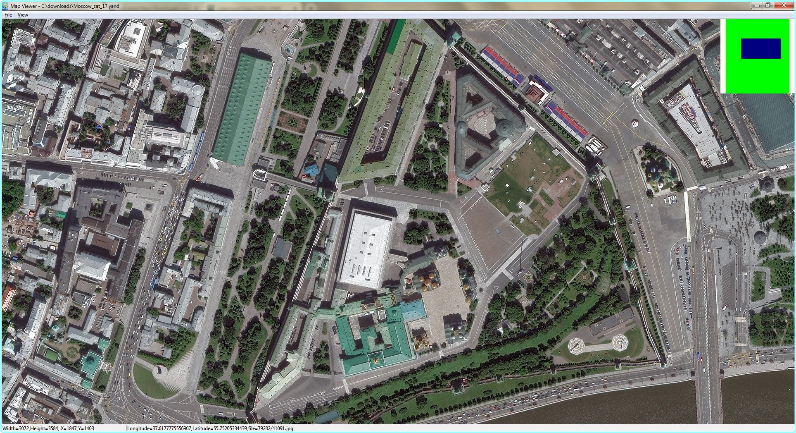
Yandex Maps Downloader is a tool that can automatically download the Yandex Maps images to your PC. It can download the small tiles and save them to your hard disk, including the normal maps, satellite maps, hybrid maps.

Whats New
Updates: official site does not provide any info about changes in this version

⋆🕷- – – – -☽───⛧ ⤝❖⤞ ⛧───☾ – – – -🕷⋆

AllMapSoft Yandex Maps Downloader 5.831 – (18 MB)
RapidGator Link(s)
Code:Copy to clipboard

https://rapidgator.net/file/e81f824287f0fcbee07415afddb57bf7/AllMapSoft.Yandex.Maps.Downloader.5.831.rar

ClickNUpload Link(s)
Code:Copy to clipboard

https://clicknupload.click/xhvdydyd0wjy