Create Agents with v0 and Vercel (No Code Required)


Create Agents with v0 and Vercel (No Code Required)
.MP4, AVC, 1280×720, 30 fps | English, AAC, 2 Ch | 20m | 56.5 MB
Instructor: Eve Porcello​

This course shows how to build a real, working AI agent using v0, the natural‑language app builder from Vercel-no coding required. By describing what you want in your own words, you can create and evolve an agent that reflects how modern teams actually work with AI.

Designed for product managers, designers, marketers, and other nontraditional developers, the course goes beyond demos and isolated prompts. You complete an end‑to‑end, production‑shaped project: building an agent, training it with context using file uploads, storing and managing customer feedback, iterating features through follow‑up prompts, and deploying a live app to Vercel.

By the end, you’ll have hands‑on experience creating, refining, and shipping an AI‑powered product for real business use cases.

Learning objectives

  • Create and iterate on an AI agent using natural‑language prompts.
  • Enable the agent to take meaningful actions on user input.
  • Store, seed, and manage customer feedback with a database.
  • Add features and modify layouts through prompt‑driven updates.
  • Deploy a live, production‑ready agent to Vercel.

Homepage

RapidGator
Code:Copy to clipboard

https://rapidgator.net/file/853091b6f2640d2c3f03f9bfa6ae5c7e/Linkedin.Learning..Create.Agents.With.V0.And.Vercel.No.Code.Required.2026.BOOKWARELERNSTUF.rar

DDownload
Code:Copy to clipboard

https://ddownload.com/x4sby1lhy0ex/Linkedin.Learning..Create.Agents.With.V0.And.Vercel.No.Code.Required.2026.BOOKWARELERNSTUF.rar

<—====All Premium====—>
UsersDrive
Code:Copy to clipboard

https://usersdrive.com/pyjiwkotc1gp/Linkedin.Learning..Create.Agents.With.V0.And.Vercel.No.Code.Required.2026.BOOKWARELERNSTUF.rar

Create A Victorian Room With Blender And Substance Painter


Create A Victorian Room With Blender And Substance Painter
Published 7/2022
MP4 | Video: h264, 1280×720 | Audio: AAC, 44.1 KHz
Language: English | Size: 13.92 GB | Duration: 18h 33m​

Learn Blender while creating a detailed environment suitable for animation or games.

What you’ll learn
Model 3D objects in Blender
Texture 3D models in Substance Painter
Render an animation using Blender’s Cycles render engine
Edit a video with Blender’s Video Sequence Editor
Requirements
Blender and Substance Painter are used in this course. The free paint program, Krita, is used briefly to edit images.
Description
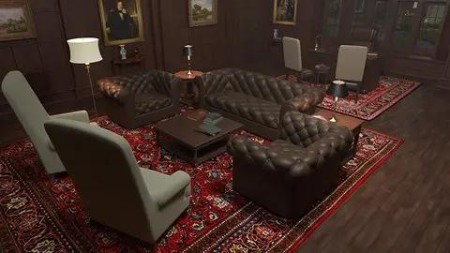
In this course you’ll learn how to create a detailed interior scene using tools and techniques that apply equally to both animation and video games. We’ll use Blender to create the 3D models of the furniture, accessories, and the structure of the room. And then we’ll work on UV mapping all of the 3D objects, getting them ready for export, and taking them into Substance Painter for texturing. You’ll learn how to use layer masks in Substance Painter to quickly create realistic textures for your 3D objects.We’ll set up a Blender export template in Substance Painter, and export our texture maps so that we can use Blender’s Node Wrangler to easily apply the textures to our scene. Next we’ll work on lighting the scene, and rendering using Blender’s Cycles render engine. We’ll animate the camera and use Blender’s Video Sequence Editor to edit our rendered shots together. We’ll even add some music and then render it all out to a single mp4 video file.If you’re interested in creating environments for animation or video games, then this course is for you. You’ll learn how to create a realistic, detailed scene from the first polygon to the final render. So join me as we "Create a Victorian Room with Blender and Substance Painter."

Overview

Section 1: Introduction

Lecture 1 Introduction to the Course

Lecture 2 Setting Up a Reference Figure

Section 2: Modeling the Furniture

Lecture 3 Beginning the Coffee Table

Lecture 4 Continuing the Coffee Table

Lecture 5 Finishing the Coffee Table

Lecture 6 Modeling the Round End Table

Lecture 7 Completing the Round End Table

Lecture 8 Starting the Arm Chair

Lecture 9 Refining the Shape of the Arm Chair

Lecture 10 Creating the Legs of the Chair

Lecture 11 Using the Path Tool

Lecture 12 Creating the Front Panels of the Arm Chair

Lecture 13 Finishing the Arm Chair

Lecture 14 Starting the Dining Chair

Lecture 15 Creating the Legs of the Dining Chair

Lecture 16 Modeling the Back of the Dining Chair

Lecture 17 Completing the Dining Chair

Lecture 18 Beginning the Chesterfield Sofa

Lecture 19 Finishing the Chesterfield Sofa

Lecture 20 Creating the Chesterfield Chair

Lecture 21 Beginning the Desk

Lecture 22 Adding the Drawers to the Desk

Lecture 23 Finishing the Desk

Lecture 24 Beginning the Desk Chair

Lecture 25 Creating the Cushions of the Desk Chair

Lecture 26 Modeling the Legs of the Desk Chair

Lecture 27 Finishing the Desk Chair

Lecture 28 Beginning the Wall Table

Lecture 29 Creating the Drawers and Legs of the Wall Table

Lecture 30 Finishing the Wall Table

Lecture 31 Beginning the Side Chair

Lecture 32 Working on the Legs of the Side Chair

Lecture 33 Finishing the Side Chair

Lecture 34 Starting the End Table

Lecture 35 Completing the End Table

Section 3: Modeling the Room

Lecture 36 Using Walk Navigation

Lecture 37 Blocking In the Walls and Panels

Lecture 38 Modeling the Mantel of the Fireplace

Lecture 39 Continuing the Fireplace

Lecture 40 Using the Boolean Modifier

Lecture 41 Placing the Fireplace in the Room

Lecture 42 Creating the Door Opening and Hallway

Lecture 43 Modeling the Door Panels

Lecture 44 Working on the Wall Details

Lecture 45 Adding the High Windows

Lecture 46 Finishing the Wood Panels

Lecture 47 Finishing the Window Frames

Section 4: UV Mapping the Furniture

Lecture 48 The Basic Tools of UV Mapping

Lecture 49 UV Mapping the Coffee Table

Lecture 50 Testing and Organizing the UV Map

Lecture 51 UV Mapping the Round Table

Lecture 52 Beginning the UV Map for the End Table

Lecture 53 Finishing the End Table

Lecture 54 UV Mapping the Wall Table

Lecture 55 UV Mapping the Dining Chair

Lecture 56 UV Mapping the High Back Chair

Lecture 57 Finishing the High Back Chair

Lecture 58 UV Mapping the Arm Chair

Lecture 59 UV Mapping the Desk Chair

Lecture 60 UV Mapping the Desk

Lecture 61 Finishing the Desk

Lecture 62 UV Mapping the Sofa

Lecture 63 UV Mapping the Chesterfield Chair

Section 5: Texturing the Furniture with Substance Painter

Lecture 64 Possible Issues When Exporting

Lecture 65 Possible Issues when Baking

Lecture 66 Aligning the Wood Grain of the Coffee Table

Lecture 67 Exporting Texture Maps from Substance Painter

Lecture 68 Using Blender’s Vertex Paint Tool

Lecture 69 Adding Textures Based on a Color ID Map

Lecture 70 Setting Vertex Colors for the Dining Chair

Lecture 71 Texturing the Dining Chair

Lecture 72 Using Materials Instead of Vertex Colors

Lecture 73 Using Paint Layers in Substance Painter

Lecture 74 Finishing the Wall Table

Lecture 75 Texturing the Desk Chair

Lecture 76 Blender’s Two Sculpting Methods

Lecture 77 Sculpting the Wrinkles of the Desk Chair

Lecture 78 Baking a Normal Map in Blender

Lecture 79 Using the Baked Normal Map in Substance Painter

Lecture 80 Using a Custom UV Test Pattern

Lecture 81 Texturing the Desk in Substance Painter

Lecture 82 Texturing the Arm Chair

Lecture 83 Texturing the End Table

Lecture 84 Preparing the Sofa for Export

Lecture 85 Texturing the Chesterfield Sofa

Lecture 86 Painting Out Problem Areas in the Normal Map

Lecture 87 Using Smart Materials in Substance Painter

Lecture 88 Texturing the Small Round Table

Section 6: UV Mapping the Room

Lecture 89 Beginning to UV Map the Room

Lecture 90 UV Mapping the Fireplace

Lecture 91 UV Mapping the Walls

Lecture 92 Finishing the Room UV Maps

Section 7: Texturing the Room

Lecture 93 Exporting and Baking the Room

Lecture 94 Texturing the Room

Lecture 95 Applying Textures to the Room

Lecture 96 Exporting the Room Textures

Lecture 97 Applying the Room Textures in Blender

Section 8: Creating Accessories and Trim

Lecture 98 Creating the Rugs

Lecture 99 Modeling the Crown Molding

Lecture 100 UV Mapping the Crown Molding

Lecture 101 Texturing the Crown Molding

Lecture 102 Using Krita to Texture the Paintings

Lecture 103 Creating the Bookshelves

Lecture 104 Creating Antique Books

Lecture 105 Using Blender’s Physics Engine to Drape a Blanket

Lecture 106 Modeling the Leaded Glass Windows

Section 9: Lighting and Rendering the Scene

Lecture 107 Render Settings and Emissive Materials

Lecture 108 Practical Lights and Camera Settings

Lecture 109 Creating the Window Glass Material

Lecture 110 Adding Lights to the Scene

Lecture 111 Creating Volumetric Lighting

Lecture 112 Render Settings and Light Properties

Lecture 113 Creating a Quick Fire Simulation

Lecture 114 Setting Up the Scene for Rendering

Lecture 115 Rendering an Animation

Lecture 116 Using Blender’s Video Sequence Editor

Lecture 117 Animating the Rotating Record Player

Lecture 118 Adding Transitions and Rendering

Lecture 119 Adding Music

Lecture 120 Thank You!

Beginner Blender users who would like to learn environment creation.

RapidGator
Code:Copy to clipboard

https://rapidgator.net/file/d2d118a90e5514c7035e55fa89fd863f/Skillshare..Create.a.Victorian.Room.with.Blender.and.Substance.Painter.by.Darrin.Lile.2022.part01.rar
https://rapidgator.net/file/81131a6ca4133e061dfc5b9a31cb5e26/Skillshare..Create.a.Victorian.Room.with.Blender.and.Substance.Painter.by.Darrin.Lile.2022.part02.rar
https://rapidgator.net/file/b1a6c2c92503de07c2e4f4e989822d3c/Skillshare..Create.a.Victorian.Room.with.Blender.and.Substance.Painter.by.Darrin.Lile.2022.part03.rar
https://rapidgator.net/file/b47f7cc1827e2fdce509f3095bd48909/Skillshare..Create.a.Victorian.Room.with.Blender.and.Substance.Painter.by.Darrin.Lile.2022.part04.rar
https://rapidgator.net/file/fc5103e2b22c2a972fcb56dc9f729729/Skillshare..Create.a.Victorian.Room.with.Blender.and.Substance.Painter.by.Darrin.Lile.2022.part05.rar
https://rapidgator.net/file/221b2962aed0845f0e04598389e25ae4/Skillshare..Create.a.Victorian.Room.with.Blender.and.Substance.Painter.by.Darrin.Lile.2022.part06.rar
https://rapidgator.net/file/0f3694cf6ef95b7293299ef43ff0f0c1/Skillshare..Create.a.Victorian.Room.with.Blender.and.Substance.Painter.by.Darrin.Lile.2022.part07.rar
https://rapidgator.net/file/88bd7862a125e66417a81e72fe9c5a47/Skillshare..Create.a.Victorian.Room.with.Blender.and.Substance.Painter.by.Darrin.Lile.2022.part08.rar
https://rapidgator.net/file/eaf280c51cfabf0118c2920401b1ba9d/Skillshare..Create.a.Victorian.Room.with.Blender.and.Substance.Painter.by.Darrin.Lile.2022.part09.rar
https://rapidgator.net/file/43cb9e8308f8ce488d1313c224b6e4c5/Skillshare..Create.a.Victorian.Room.with.Blender.and.Substance.Painter.by.Darrin.Lile.2022.part10.rar
https://rapidgator.net/file/8cf78e93c34d3b1d0740082a34366684/Skillshare..Create.a.Victorian.Room.with.Blender.and.Substance.Painter.by.Darrin.Lile.2022.part11.rar
https://rapidgator.net/file/ab4c2fb4484b54df7c4f80bc9e399949/Skillshare..Create.a.Victorian.Room.with.Blender.and.Substance.Painter.by.Darrin.Lile.2022.part12.rar
https://rapidgator.net/file/c513ee0ff07a1c02a365a61679e96226/Skillshare..Create.a.Victorian.Room.with.Blender.and.Substance.Painter.by.Darrin.Lile.2022.part13.rar
https://rapidgator.net/file/e4e5b43b109d89b43e86e428f708da4e/Skillshare..Create.a.Victorian.Room.with.Blender.and.Substance.Painter.by.Darrin.Lile.2022.part14.rar
https://rapidgator.net/file/9b4412e3bafdf4f29dedce5cf14c6601/Skillshare..Create.a.Victorian.Room.with.Blender.and.Substance.Painter.by.Darrin.Lile.2022.part15.rar
https://rapidgator.net/file/833288077b6528ce0cb8ed68e0063755/Skillshare..Create.a.Victorian.Room.with.Blender.and.Substance.Painter.by.Darrin.Lile.2022.part16.rar
https://rapidgator.net/file/b1f2e13b7386c2c54fa8662baa3251a9/Skillshare..Create.a.Victorian.Room.with.Blender.and.Substance.Painter.by.Darrin.Lile.2022.part17.rar
https://rapidgator.net/file/c090626da63be81b6b3697fb3238cc5d/Skillshare..Create.a.Victorian.Room.with.Blender.and.Substance.Painter.by.Darrin.Lile.2022.part18.rar

<—====All Premium====—>
UsersDrive
Code:Copy to clipboard

https://usersdrive.com/bqukfkjhw293/Skillshare..Create.a.Victorian.Room.with.Blender.and.Substance.Painter.by.Darrin.Lile.2022.part01.rar
https://usersdrive.com/fx4r4v6b02gb/Skillshare..Create.a.Victorian.Room.with.Blender.and.Substance.Painter.by.Darrin.Lile.2022.part02.rar
https://usersdrive.com/euq9vz9cyn0d/Skillshare..Create.a.Victorian.Room.with.Blender.and.Substance.Painter.by.Darrin.Lile.2022.part03.rar
https://usersdrive.com/m8l4ifs9ru4o/Skillshare..Create.a.Victorian.Room.with.Blender.and.Substance.Painter.by.Darrin.Lile.2022.part04.rar
https://usersdrive.com/a0nx9wu1ddqs/Skillshare..Create.a.Victorian.Room.with.Blender.and.Substance.Painter.by.Darrin.Lile.2022.part05.rar
https://usersdrive.com/rbie1dggk29f/Skillshare..Create.a.Victorian.Room.with.Blender.and.Substance.Painter.by.Darrin.Lile.2022.part06.rar
https://usersdrive.com/44ldrll9af9u/Skillshare..Create.a.Victorian.Room.with.Blender.and.Substance.Painter.by.Darrin.Lile.2022.part07.rar
https://usersdrive.com/4xjnmwr8gp2q/Skillshare..Create.a.Victorian.Room.with.Blender.and.Substance.Painter.by.Darrin.Lile.2022.part08.rar
https://usersdrive.com/45xr83fbdphu/Skillshare..Create.a.Victorian.Room.with.Blender.and.Substance.Painter.by.Darrin.Lile.2022.part09.rar
https://usersdrive.com/7c9t1lrwowgq/Skillshare..Create.a.Victorian.Room.with.Blender.and.Substance.Painter.by.Darrin.Lile.2022.part10.rar
https://usersdrive.com/x0dlb8bhcbmx/Skillshare..Create.a.Victorian.Room.with.Blender.and.Substance.Painter.by.Darrin.Lile.2022.part11.rar
https://usersdrive.com/gszn2wix0q9o/Skillshare..Create.a.Victorian.Room.with.Blender.and.Substance.Painter.by.Darrin.Lile.2022.part12.rar
https://usersdrive.com/12p56zk6fj65/Skillshare..Create.a.Victorian.Room.with.Blender.and.Substance.Painter.by.Darrin.Lile.2022.part13.rar
https://usersdrive.com/nwo2dn82792d/Skillshare..Create.a.Victorian.Room.with.Blender.and.Substance.Painter.by.Darrin.Lile.2022.part14.rar
https://usersdrive.com/1tx36akms9qz/Skillshare..Create.a.Victorian.Room.with.Blender.and.Substance.Painter.by.Darrin.Lile.2022.part15.rar
https://usersdrive.com/z1kwaxmtxjat/Skillshare..Create.a.Victorian.Room.with.Blender.and.Substance.Painter.by.Darrin.Lile.2022.part16.rar
https://usersdrive.com/fzpsb0bchh7k/Skillshare..Create.a.Victorian.Room.with.Blender.and.Substance.Painter.by.Darrin.Lile.2022.part17.rar
https://usersdrive.com/1dgsxl4tzshx/Skillshare..Create.a.Victorian.Room.with.Blender.and.Substance.Painter.by.Darrin.Lile.2022.part18.rar

Coursera – Natural Language Processing Specialization by deeplearning.ai


Coursera – Natural Language Processing Specialization by deeplearning.ai
Video: .mp4 (1280×720) | Audio: AAC, 44100 kHz, 2ch | Size: 748.99 Mb
Genre: eLearning Video | Duration: 6h 59m | Language: English​

Break into the NLP space. Master cutting-edge NLP techniques through four hands-on courses!

Natural Language Processing with Classification and Vector Spaces
In Course 1 of the Natural Language Processing Specialization, offered by deeplearning.ai, you will:

a) Perform sentiment analysis of tweets using logistic regression and then naïve Bayes, b) Use vector space models to discover relationships between words and use PCA to reduce the dimensionality of the vector space and visualize those relationships, and c) Write a simple English to French translation algorithm using pre-computed word embeddings and locality sensitive hashing to relate words via approximate k-nearest neighbor search. Please make sure that you’re comfortable programming in Python and have a basic knowledge of machine learning, matrix multiplications, and conditional probability. By the end of this Specialization, you will have designed NLP applications that perform question-answering and sentiment analysis, created tools to translate languages and summarize text, and even built a chatbot! This Specialization is designed and taught by two experts in NLP, machine learning, and deep learning. Younes Bensouda Mourri is an Instructor of AI at Stanford University who also helped build the Deep Learning Specialization. Łukasz Kaiser is a Staff Research Scientist at Google Brain and the co-author of Tensorflow, the Tensor2Tensor and Trax libraries, and the Transformer paper.

Natural Language Processing with Probabilistic Models
In Course 2 of the Natural Language Processing Specialization, offered by deeplearning.ai, you will:

a) Create a simple auto-correct algorithm using minimum edit distance and dynamic programming, b) Apply the Viterbi Algorithm for part-of-speech (POS) tagging, which is important for computational linguistics, c) Write a better auto-complete algorithm using an N-gram language model, and d) Write your own Word2Vec model that uses a neural network to compute word embeddings using a continuous bag-of-words model. Please make sure that you’re comfortable programming in Python and have a basic knowledge of machine learning, matrix multiplications, and conditional probability. By the end of this Specialization, you will have designed NLP applications that perform question-answering and sentiment analysis, created tools to translate languages and summarize text, and even built a chatbot! This Specialization is designed and taught by two experts in NLP, machine learning, and deep learning. Younes Bensouda Mourri is an Instructor of AI at Stanford University who also helped build the Deep Learning Specialization. Łukasz Kaiser is a Staff Research Scientist at Google Brain and the co-author of Tensorflow, the Tensor2Tensor and Trax libraries, and the Transformer paper.

Natural Language Processing with Sequence Models
In Course 3 of the Natural Language Processing Specialization, offered by deeplearning.ai, you will:

a) Train a neural network with GLoVe word embeddings to perform sentiment analysis of tweets, b) Generate synthetic Shakespeare text using a Gated Recurrent Unit (GRU) language model, c) Train a recurrent neural network to perform named entity recognition (NER) using LSTMs with linear layers, and d) Use so-called ‘Siamese’ LSTM models to compare questions in a corpus and identify those that are worded differently but have the same meaning. Please make sure that you’ve completed Course 2 and are familiar with the basics of TensorFlow. If you’d like to prepare additionally, you can take Course 1: Neural Networks and Deep Learning of the Deep Learning Specialization. By the end of this Specialization, you will have designed NLP applications that perform question-answering and sentiment analysis, created tools to translate languages and summarize text, and even built a chatbot! This Specialization is designed and taught by two experts in NLP, machine learning, and deep learning. Younes Bensouda Mourri is an Instructor of AI at Stanford University who also helped build the Deep Learning Specialization. Łukasz Kaiser is a Staff Research Scientist at Google Brain and the co-author of Tensorflow, the Tensor2Tensor and Trax libraries, and the Transformer paper.

For any request, feel free to send me a PM

RapidGator
Code:Copy to clipboard

https://rapidgator.net/file/1779ced27d62e483cc131245ec52830d/Coursera..Natural.Language.Processing.Specialization.part1.rar
https://rapidgator.net/file/d64fd730703be3ba88f89a5a18cd49f7/Coursera..Natural.Language.Processing.Specialization.part2.rar
https://rapidgator.net/file/6230e569d218bada683503e5ef7c3c3b/Coursera..Natural.Language.Processing.Specialization.part3.rar

DDownload
Code:Copy to clipboard

https://ddownload.com/kfthh2kv5cjc/Coursera..Natural.Language.Processing.Specialization.part1.rar
https://ddownload.com/5mnki230rhj4/Coursera..Natural.Language.Processing.Specialization.part2.rar
https://ddownload.com/52w2nmegoqo1/Coursera..Natural.Language.Processing.Specialization.part3.rar

<—====All Premium====—>
UsersDrive
Code:Copy to clipboard

https://usersdrive.com/bzks5pc60y00/Coursera..Natural.Language.Processing.Specialization.part1.rar
https://usersdrive.com/ct9v5nouwfc2/Coursera..Natural.Language.Processing.Specialization.part2.rar
https://usersdrive.com/f54qq0dx3z3w/Coursera..Natural.Language.Processing.Specialization.part3.rar

Coursera – IBM RAG and Agentic AI Professional Certificate


Last updated 2/2026 By IBM MP4 | Video: h264, 1280×720 | Audio: AAC, 44.1 KHz, 2 Ch Genre: eLearning | Language: English + subtitle | Duration: 110 Lessons ( 10h 24m ) | Size: 3.5 GB​

Build real-world AI with RAG and agentic AI. Use AI tools to streamline automation, drive innovation & take your career further, faster.

What you’ll learn
Build the job-aligned GenAI skills and hands-on experience to create RAG, multimodal, and agentic AI applications employers need in just 3 months
Learn to design and chain AI tools with LangChain for modular, reusable gen AI workflows
Implement function calling, RAG, and vector stores to build intelligent, context-aware applications
Create autonomous AI agents using LangGraph, CrewAI, and AG2 for real-world impact

Skills you’ll gain
Web development
Enhance your career in the high-growth field of artificial intelligence with advanced skills in generative AI. This program is designed to equip you with advanced techniques and tools such as prompt engineering, Agentic, and multimodal AI integration, enabling you to create sophisticated & context-aware AI applications.
This program will teach you advanced AI skills including developing efficient Retrieval-Augmented Generation (RAG) pipelines, integrating multimodal AI for text, image, and audio processing, as well as designing autonomous multiagent systems. The program will not only help you advance your career in AI but also provides a strong foundation for future career development in areas such as advanced data science, deep learning, and AI-driven automation.
You’ll also utilize the latest tools used by AI experts, including integrating external tools and APIs with AI agents, orchestrating complex workflows using LangChain and LangGraph, and frameworks like CrewAI, AG2, BeeAI, and Model Context Protocol (MCP).
When you complete the full program, you’ll have a portfolio of projects and a Professional Certificate from IBM to showcase your expertise.
This program is ideal for software developers, machine learning engineers, data scientists, and anyone with Python programming experience who wants to level up their AI engineering game. Enroll today and master the latest generative AI technologies at the forefront of innovation!

Applied Learning Project
Throughout this program, you’ll complete hands-on projects and labs, gaining practical experience in building AI applications with generative, retrieval-augmented, and agentic techniques.
Projects
Develop prompt engineering techniques and LangChain prompt templates
Build smart AI applications by empowering LLMs with LangChain
Set up a Gradio interface to interact with your models
Implement function calling and integrate external tools for context-aware responses
Conduct similarity searches on text using Chroma Vector DB
Build and utilize your own data visualization agent
At the end of this program, you’ll complete a real-world capstone project specifically designed to showcase your newly learned AI application skills.

Welcome to Check it Every Days
If you have any troubles with downloading, PM me

Happy Learning!!


Containers and Images: The Big Picture


Containers and Images: The Big Picture
MP4 | Video: AVC 1280×720 | Audio: AAC 44KHz 2ch | Duration: 3 Hours 9M | 457 MB
Genre: eLearning | Language: English​

Have you wondered about containers and wanted to understand the big picture of containers? If so, then you need to learn not just about containers, but also distributing images and that’s what this course will cover.

I’m sure you’ve heard of containers, but have you heard of images? In this course, Containers and Images: The Big Picture, you’ll learn about the big picture of both. This course will help you understand why containers exist and what exactly a container is, down to the level of understanding what changes in the Operating System to support these. You’ll learn a bit of history and begin to understand the significance of images because without a means of distributing images for containers, containers wouldn’t be a big deal. You’ll learn how image technology can be brought to highly optimized VMs and other execution environments. In doing this, you’ll start to see where the future of app packaging and distribution is heading. After this, you’ll learn about some ways you can get started with the benefits of containers and images outside of production environments, and finally, you’ll explore what your infrastructure might look like when you need to scale to large capacity with hundreds or thousands of containers. By the time you’re done with this course, you’ll have a good understanding of the what and why of containers, images, and clusters.

Configuring and Managing Kubernetes Storage and Scheduling


Configuring and Managing Kubernetes Storage and Scheduling
Released 10/2025
By Patrick Rusch
MP4 | Video: h264, 1280×720 | Audio: AAC, 44.1 KHz, 2 Ch
Level: Intermediate | Genre: eLearning | Language: English + subtitle | Duration: 1h 4m | Size: 137 MB​

Running apps at scale requires the right storage and scheduling. This course will teach you how to manage Kubernetes storage and influence pod placement for efficient workloads.

Modern applications rely on Kubernetes for scalability and resilience, but without the right storage and scheduling strategies, workloads can become inefficient and unreliable. In this course, Configuring and Managing Kubernetes Storage and Scheduling, you’ll learn to configure persistent storage and manage pod placement for optimized cluster performance. First, you’ll explore how Kubernetes volumes, PersistentVolumeClaims, and StorageClasses provide reliable data storage for stateful applications. Next, you’ll discover the fundamentals of pod scheduling and how to use node selectors, affinities, and taints to influence workload placement. Finally, you’ll learn how to combine storage and scheduling strategies to handle real-world scenarios and ensure your applications remain performant and stable. When you’re finished with this course, you’ll have the skills and knowledge of Kubernetes storage and scheduling needed to confidently manage workloads in production-like environments.


Configuring and Managing Kubernetes NetWorking, Services, and Ingress


Duration: 2h 5m | Video: .MP4, 1280×720 30 fps | Audio: AAC, 48 kHz, 2ch | Size: 376 MB Genre: eLearning | Language: English​

It’s time to dig deeper into Kubernetes networking! You will learn Kubernetes cluster networking fundamentals and configuring and accessing applications in a Kubernetes Cluster with Services and Ingress.

What you’ll learn
Kubernetes networking fundamentals and accessing applications running in a Kubernetes Cluster with Services and Ingress is important. In this course, Configuring and Managing Kubernetes, Services and Ingress, you will learn Kubernetes networking fundamentals and how to access applications deployed in your cluster. First, you will learn how the Kubernetes network model enables simple and consistent networking for applications and Services deployed in Kubernetes Clusters. Next, you will discover how to use Services for access to applications deployed in Kubernetes. Finally, you will explore how to expose applications outside your cluster with Ingress using several different Ingress patterns. When you’re finished with this course, you will have the skills and knowledge of Kubernetes networking needed to configure and manage your cluster network and access to your Kubernetes based applications. This course can also help you prepare for your Certified Kubernetes Administrator (CKA) certification.


RapidGator
Code:Copy to clipboard

https://rapidgator.net/file/49787a25f7725e9edd59a73d3ca5a9a5/

<—====All Premium====—>
UsersDrive
Code:Copy to clipboard

https://usersdrive.com/zrecw3ebgfxh

Configuring a Cisco Router


Configuring a Cisco Router
.MP4, AVC, 1280×720, 30 fps | English, AAC, 2 Ch | 2h 43m | 469 MB
Instructor: Ross Bagurdes​

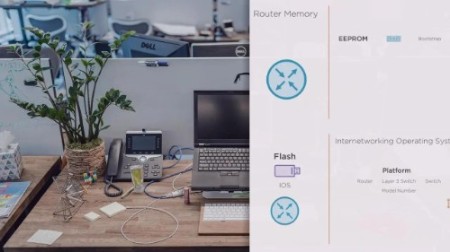
In order to earn the CCNA, you’ll need to know how to configure a Cisco router. In this course, you will learn about the router boot up process, the files that the router uses to operate, as well as see a router configuration demo.

Configuring a Cisco router is more than just entering commands. In order to properly understand what the configuration steps do, you need to have a basic understanding of the components of a router, including processor, memory, and input/outputs. In this course, Configuring a Cisco Router , you will learn different types of memory and the files stored in them, the order in which the files are loaded, as well as the function of each file. First, you will walk though, step by step, the commands and their function to properly configure the basic features of the device. This includes setting a router name, securing user and privileged modes, enabling encrypted remote support via SSH, and applying IP addresses to interfaces so the router can pass traffic. Next, you will see a demonstration about configuring the router in a long form, and then redo the same configuration using tips, tricks, and shortcuts to speed up the process. Common errors, including errors made during the configuration, will be pointed out and discussed. Finally, you will wrap up the course by examining Internetworking Operating System (IOS) file names, demonstrating how to upgrade IOS, as well as how to access router configuration when you don’t know the password. By the end of this course, you’ll understand the commands required to bring a router online, allowing it to pass traffic from one interface to another, which will help you on your path to earning the CCNA.

More Info

RapidGator
Code:Copy to clipboard

https://rapidgator.net/file/c0d8643fd0e8c51618b4b43f2f88d1c1/Pluralsight..Configuring.a.Cisco.Router.by.Ross.Bagurdes.rar

DDownload
Code:Copy to clipboard

https://ddownload.com/iiymn2xv7dw9/Pluralsight..Configuring.a.Cisco.Router.by.Ross.Bagurdes.rar

<—====All Premium====—>
UsersDrive
Code:Copy to clipboard

https://usersdrive.com/e470ey5sti8j/Pluralsight..Configuring.a.Cisco.Router.by.Ross.Bagurdes.rar

Conditional Formatting in Microsoft Excel


Conditional Formatting in Microsoft Excel
Released/Updated: Aug 26, 2024
Duration: 28m 31s | .MP4 1920×1080, 30 fps(r) | AAC, 48000 Hz, 2ch | 177 MB
Genre: eLearning | Language: English​

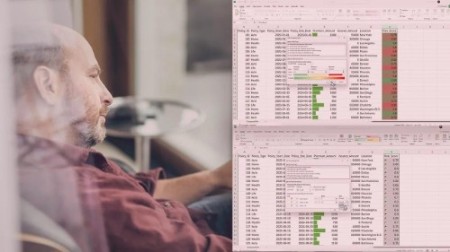
Microsoft Excel powers business insights and productivity. This course will teach you the fundamentals of conditional formatting to make your data visually appealing and easier to analyze.
What you’ll learn

Excel’s conditional formatting can transform raw data into meaningful insights. In this course, Conditional Formatting in Microsoft Excel, you’ll explore various conditional formatting options, learn to apply them to different data sets, and create visually appealing and easy-to-read spreadsheets that convey information clearly. When you’re finished with this course, you’ll have a better understanding of how to use conditional formatting to enhance the visual impact and clarity of your data.

More Info

Please check out others courses in your favourite language and bookmark them
– – – –

Computational Physics Scientific Programming with Python


6.87 GB | 23min 20s | mp4 | 1280X720 | 16:9
Genre:eLearning |Language:English
Files Included :
002 Structure & Overview of this course.mp4 (34.57 MB)
003 Installing Python via Anaconda for free.mp4 (40.37 MB)
004 Jupyter notebook – Our tool of choice.mp4 (20.95 MB)
005 Style your notebook.mp4 (18.24 MB)
006 HOW TO use this course.mp4 (28.57 MB)
009 (optional) Style sheets for your notebook.mp4 (45.19 MB)
010 (optional) Alternative development environments For large projects – PyCharm.mp4 (31.51 MB)
011 (optional) Alternative development environments Allrounder – Visual Studio Code.mp4 (27.26 MB)
012 (optional) Environments & Updates.mp4 (16.41 MB)
001 Introduction to section Optional Python crash course.mp4 (32.58 MB)
003 Numpy & Basic mathematics.mp4 (23.37 MB)
004 Data types of numbers.mp4 (26.88 MB)
005 Strings.mp4 (11.84 MB)
007 Lists.mp4 (33.18 MB)
008 Arrays.mp4 (47.43 MB)
009 Vectors & Matrices.mp4 (43.22 MB)
010 Dictionaries.mp4 (22.84 MB)
011 Loops & If statements.mp4 (37.4 MB)
012 Working with data files.mp4 (41.43 MB)
013 Functions.mp4 (42.14 MB)
015 Plots with matplotlib.mp4 (68 MB)
016 Density plot.mp4 (57.15 MB)
017 3D Plots.mp4 (49.45 MB)
018 Crash course recap.mp4 (9.13 MB)
001 Introduction.mp4 (33.17 MB)
003 Taylor expansion of exponential function.mp4 (49.13 MB)
004 Taylor expansion of sin function.mp4 (30.42 MB)
005 Numerically calculating (higher) derivatives.mp4 (48.94 MB)
006 Taylor expansion of general function.mp4 (56.94 MB)
007 Interpolation.mp4 (36.69 MB)
008 Linear and cubic splines.mp4 (36.49 MB)
009 Using splines to fit perturbed data.mp4 (39.64 MB)
010 Perfect interpolation using polynomials – Solving a system of linear equations.mp4 (81.09 MB)
012 Fitting a polynomial model function.mp4 (23.2 MB)
013 Calculating the fitting error.mp4 (32.2 MB)
014 Calculating the gradient of the error.mp4 (59.07 MB)
015 Update the coefficients using gradient descent.mp4 (67.74 MB)
017 Section recap.mp4 (15.32 MB)
001 Introduction.mp4 (48.16 MB)
003 Background Derivatives.mp4 (16.72 MB)
004 Implementation of derivatives in Python.mp4 (59.14 MB)
005 Why is the central-differences method better.mp4 (51.37 MB)
006 Better accuracy Richardson method.mp4 (108.95 MB)
007 Implementing second derivative.mp4 (65.96 MB)
008 [Exercise] Calculate velocity and acceleration.mp4 (16.95 MB)
010 [Solution] Calculate velocity and acceleration.mp4 (123.86 MB)
011 Multidimensional derivatives Gradient.mp4 (49.1 MB)
012 Multidimensional derivatives Divergence & curl.mp4 (37.67 MB)
013 Section recap.mp4 (29.49 MB)
001 Introduction.mp4 (41.92 MB)
003 Background on integrals.mp4 (35.86 MB)
004 Discretizing integrals & Trapezoidal method.mp4 (63.05 MB)
005 Improving accuracy Simpson rule and beyond.mp4 (44.34 MB)
006 [Project] Rotational energy & Moment of inertia – Start with a point mass.mp4 (62.88 MB)
007 Rotating a stick around one end.mp4 (71.82 MB)
008 [Exercise] Rotating a stick around the center.mp4 (9.73 MB)
009 [Solution] Rotating a stick around the center.mp4 (18 MB)
010 Rotating a sphere Analytical solution.mp4 (34.73 MB)
011 Rotating a sphere Numerical solution.mp4 (67.57 MB)
012 [Exercise] Rotating a spherical shell.mp4 (13.56 MB)
013 [Solution] Rotating a spherical shell.mp4 (29.32 MB)
014 [Project] Magnetic field of a wire – Explaining the problem.mp4 (35.9 MB)
015 Preparing the arrays.mp4 (48.81 MB)
016 Calculating the vector potential of a charged wire.mp4 (86.66 MB)
017 Calculating the magnetic field of a charged wire.mp4 (63.65 MB)
018 Quiver plot of the magnetic field.mp4 (33.63 MB)
019 Analyzing a periodic signal via Fourier transforms.mp4 (20.9 MB)
020 Fourier transform.mp4 (50.43 MB)
021 Numpy Fast fourier transform (FFT).mp4 (13.16 MB)
022 Section recap.mp4 (17.69 MB)
001 Introduction.mp4 (37.01 MB)
003 Background Euler method.mp4 (17.44 MB)
004 Example 1 Radioactive decay.mp4 (48.65 MB)
005 Defining a general function for the Euler method.mp4 (45.08 MB)
006 Example 2 Time-amplified radioactive decay.mp4 (33.47 MB)
007 Higher-order differential equations.mp4 (38.35 MB)
008 Example 3 Free fall.mp4 (30.36 MB)
009 Example 4 Pendulum.mp4 (39.75 MB)
010 Accurate solution of the pendulum.mp4 (24.62 MB)
011 Adding damping and driving forces.mp4 (41.09 MB)
012 Improvement Use the SciPy function solve ivp.mp4 (53.31 MB)
013 Higher-order differential equations with solve ivp.mp4 (37.88 MB)
014 Compare different methods for solving differential equations.mp4 (78.23 MB)
015 Implementation of Runge Kutta 4th order method.mp4 (63.68 MB)
016 Implementation of RK45.mp4 (36.28 MB)
017 Comparison of our three methods to solve differential equations.mp4 (52.35 MB)
018 Section recap.mp4 (15.13 MB)
001 Introduction.mp4 (46.4 MB)
003 [Project] Simulating a rolling ball – Two decoupled oscillators.mp4 (33.97 MB)
004 Solving the differential equation of a rolling ball.mp4 (69.61 MB)
005 Different starting conditions & external forces acting on the ball.mp4 (44.68 MB)
006 [Project] Chaos & Lorenz systems – Explanation of the differential equation.mp4 (11.52 MB)
007 Solving the Lorenz differential equation for the chaotic case.mp4 (68.93 MB)
008 Solving the Lorenz differential equation for the non-chaotic case.mp4 (24.35 MB)
009 [Project] Heat equation – Explanation of the differential equation.mp4 (30.32 MB)
010 Solving the heat equation in one dimension.mp4 (75.29 MB)
011 Solving the heat equation in two dimensions.mp4 (112.56 MB)
012 [Project] 3-body problem Coupled differential equations for sun, earth & moon.mp4 (29.33 MB)
013 Coding the differential equations for sun, earth & moon.mp4 (58.07 MB)
014 Solving the differential equations for sun, earth & moon.mp4 (33.25 MB)
015 Analyzing the orbital motion of earth & moon.mp4 (82.43 MB)
016 Comment on inclination of the moon.mp4 (8.89 MB)
017 [Project] Rocketship – Coding & Solving the differential equations.mp4 (49.89 MB)
018 Changing starting velocity Elliptical orbit around earth.mp4 (44.97 MB)
019 Simulating earth escape.mp4 (54.5 MB)
020 Simulating a moon encounter.mp4 (30.52 MB)
021 Brake maneuver to reach moon orbit.mp4 (87.79 MB)
022 Section recap.mp4 (16.27 MB)
001 Introduction.mp4 (35.48 MB)
003 Three coupled oscillators Equations of motion.mp4 (31.16 MB)
004 Numerical solution of the coupled differential equations.mp4 (52.66 MB)
005 Why is it an eigenvalue problem.mp4 (27.83 MB)
006 [Exercise] Write your own routine to calculate the eigenvalues.mp4 (11.26 MB)
007 [Solution] Write your own routine to calculate the eigenvalues.mp4 (80.37 MB)
008 Analyzing the eigenmodes of the three coupled oscillators.mp4 (25.31 MB)
009 Fourier transform Find the characteristic frequencies of the numerical solution.mp4 (72.76 MB)
010 [Exercise] Fit three harmonic oscillations to our numerical solution.mp4 (20.24 MB)
011 [Solution] Fit three harmonic oscillations to our numerical solution.mp4 (94 MB)
012 Generalization to n coupled oscillators.mp4 (62.03 MB)
013 Introduce periodic boundary conditions.mp4 (29.52 MB)
001 Introduction.mp4 (50.57 MB)
003 [Project] Calculating Pi – Explaining the idea.mp4 (24.89 MB)
004 Approximating Pi using a Monte Carlo algorithm.mp4 (61.24 MB)
005 Alternative solution and time comparison for approximating Pi.mp4 (40.52 MB)
006 [Project] Simulating a magnet – Setting up & plotting the initial state.mp4 (98.33 MB)
007 Defining the energy.mp4 (79.19 MB)
008 Simulating a Metropolis step.mp4 (116.38 MB)
009 Running the Monte Carlo algorithm.mp4 (61.33 MB)
010 Improve code using finite temperatures.mp4 (65.68 MB)
011 Implement interaction with a magnetic field.mp4 (43.45 MB)
012 Dzyaloshinskii-Moriya interaction giving rise to non-collinear spin textures.mp4 (96 MB)
013 Section recap.mp4 (22.96 MB)
001 Introduction.mp4 (26.31 MB)
004 Finding the first solution via the shooting method.mp4 (33.66 MB)
005 Determining & Discussing the eigensystem of the particle in a box.mp4 (90.85 MB)
007 Adapting our notebook to the new potential.mp4 (33.51 MB)
008 Determining & Discussing the eigensystem of the quantum harmonic oscillator.mp4 (93.61 MB)
010 Use Mathematica to solve the problem with only a few lines of code.mp4 (18.1 MB)
011 Section recap.mp4 (20.23 MB)
001 Introduction.mp4 (39.37 MB)
003 From free electrons to band structures.mp4 (122.58 MB)
004 Plotting a graphene lattice.mp4 (73.01 MB)
005 Band structure of graphene.mp4 (136.54 MB)
006 Dirac points and massless electrons.mp4 (32.27 MB)
007 Plotting a graphene nanoribbon.mp4 (85.4 MB)
008 Band structure of a graphene nanoribbon.mp4 (113.02 MB)
009 Applying magnetic field Landau quantization & Quantum Hall effect.mp4 (127.59 MB)
010 Moire lattice of twisted bilayers of graphene.mp4 (47.94 MB)
011 Section recap.mp4 (22.64 MB)
013 THANK YOU & GOODBYE!.mp4 (13.89 MB)]
Screenshot