Learn Figma UI UX Design Masterclass From Beginner to Pro

Manufacturer : Udemy
Автор: James Joab Soren Hudson Dynamic Lab
Duration : 4h 30m
Type of material distributed : Video lesson
Language : En

Description : Please do not leave the distribution, I will not be able to maintain the distribution forever.
Share the freebie with other people, don’t leave the distribution.
Encourage other people to switch to roottracker.
Course in En. Added En subtitles using speech to text for Adobe Premier Pro.
Welcome to our class of figma uiux beginner tutorial for learning how to use figma for uiux so if you are planning to learn how to use figma from the beginning then you are in the right place because we will cover in this. This class covers the basics so if you have any prior experience than it might be helpful for you to understand this class properly, if not then don’t worry as we will be teaching you all that you need to know as we go.
Let’s take a look at what you will be learning from this course;
1. Interface & Workspace
2. Tools & Utilities
3. Understanding Layers & Pages
4. Adding & Designing Text
5. Creating Wireframes
6. Button
7. Smart Selection % Tidy
8. Input Fields
9. Prototyping & Animation
10. Smart Animations & Micro Interaction
11. Collaborating in Figma
12. Organizing and optimising work using Grids
13. Colour theory & Colour Tools
14. Using colour Gradients & Layouts
15. Making a Placeholder Image
16. Masking and cropping
After Completing this Class, you will be able to
· Use Figma to make basic UIUX Designs
· Use the interface to utilize and enhance productivity
· Colour Grade
· Export in more advance and customized settings
· Optimise Workflow
· Do Project Examples
Now do keep this in mind that is a project-based Course, so at the end of all the classes you will have a class project that will enable you to actively participate in them to practice or refine what you have learned throughout the entire course. You will be provided with supporting resources so it will become easier to learn as we go.
During Learning if you have any queries or problem then do feel free to ask me. I will always be available to help if needed. So let us go ahead and start.
Content
Chapter 1-Introduction
Example files : none
Video format : MP4
Video : H265 1280×720 16:9 30k/sec 300 kbit/sec
Audio : AAC 48 kHz 128 kbps 2 channels

⋆🕷- – – – -☽───⛧ ⤝❖⤞ ⛧───☾ – – – -🕷⋆

Learn Figma UI UX Design Masterclass From Beginner to Pro (761.12 MB)
RapidGator Link(s)
Code:Copy to clipboard

https://rapidgator.net/file/fa8ea421661254e8ea5451161f3a34e7/Learn.Figma.UI.UX.Design.Masterclass.From.Beginner.to.Pro.rar

ClickNUpload Link(s)
Code:Copy to clipboard

https://clicknupload.click/wuxvwh172u91

Learn Ethical Hacking From Scratch 2024


Learn Ethical Hacking From Scratch 2024
Last updated 6/2024
Duration: 15h33m | .MP4 1280×720, 30 fps(r) | AAC, 44100 Hz, 2ch | 20.4 GB
Genre: eLearning | Language: English​

Become an ethical hacker that can hack like black hat hackers and secure systems like cybersecurity experts

What you’ll learn
145+ videos (15+ hours) to teach you ethical hacking & cybersecurity from scratch.
Use 30+ hacking tools such as Metasploit, Aircrack-ng, SQLmap, etc.
85+ hands-on real-life hacking examples.
No prior knowledge required
Hack & secure WiFi & wired networks.
Hack cloud servers.
Create backdoors & Hack Windows.
Start from 0 up to a high-intermediate level.
Discover & exploit web application vulnerabilities to hack websites.
Learn Network Hacking / Penetration Testing.
Learn about the different hacking fields & hackers.
Install a hacking lab & needed software (on Windows, OS X and Linux).
Discover vulnerabilities & exploit them to hack into servers.
Hack secure systems using client-side & social engineering.
Secure systems from all the attacks shown.
Install & use Kali Linux – a hacking operating system.
Linux basics.
Linux commands
How to use the Linux terminal.
Network basics & how devices interact inside a network.
Run attacks on networks without knowing its key.
Control Wi-Fi connections without knowing the password.
Create a fake Wi-Fi network with internet connection & spy on clients.
Gather detailed information about networks & connected clients like their OS, ports .etc.
Crack WEP/WPA/WPA2 encryptions.
ARP Spoofing / ARP Poisoning.
Launch various Man In The Middle attacks.
Access any account accessed by any client on the network.
Sniff network traffic & analyse it to extract important info such as: passwords, cookies, urls, videos, images ..etc.
Intercept network traffic & modify it on the fly.
Discover devices connected to the same network.
Inject Javascript in pages loaded by clients connected to the same network.
Redirect DNS requests to any destination (DNS spoofing).
Secure networks from the discussed attacks.
Edit router settings for maximum security.
Discover suspicious activities in networks.
How to prevent MITM attacks.
Discover open ports, installed services and vulnerabilities on computer systems.
Exploit buffer over flows & code execution vulnerabilities to gain control over systems.
Hack systems using client side attacks.
Hack Windows using fake updates.
Backdoor normal programs.
Backdoor any file type such as pictures, pdf’s .etc.
Gather information about people, such as emails, social media accounts, emails and friends.
Hack secure systems using social engineering.
Send emails from ANY email account without knowing the password for that account.
Analyse malware.
Manually detect undetectable malware.
Read, write download, upload and execute files on compromised systems.
Capture keystrikes on a compromised system.
Use a compromised computer as a pivot to hack other systems.
Understand how websites & web applications work.
Understand how browsers communicate with websites.
Gather sensitive information about websites.
Discover servers, technologies & services used on target website.
Discover emails & sensitive data associated with a specific website.
Discover subdomains associated with a website.
Discover unpublished directories & files associated with a target website.
Discover websites hosted on the same server as the target website.
Exploit file upload vulnerabilities to gain control over target website.
Discover, exploit and fix code execution vulnerabilities.
Discover, exploit & fix local file inclusion vulnerabilities.
Discover, exploit & fix SQL injection vulnerabilities.
Bypass login forms and login as admin using SQL injections.
Exploit SQL injections to find databases, tables & sensitive data such as usernames, passwords.etc
Read / Write files to the server using SQL injections.
Learn the right way to write SQL queries to prevent SQL injections.
Discover reflected XSS vulnerabilities.
Discover Stored XSS vulnerabilities.
Hook victims to BeEF using XSS vulnerabilities.
Fix XSS vulnerabilities & protect yourself from them as a user.
Discover MITM & ARP Spoofing attacks.

Requirements
Basic IT Skills
No Linux, programming or hacking knowledge required.
Computer with a minimum of 4GB ram/memory.
Operating System: Windows / Apple Mac OS / Linux.
For WiFi cracking (10 lectures ONLY) – Wireless adapter that supports monitor mode (more info provided in the course).

Description
Last Update:
June 2024
Welcome this comprehensive Ethical Hacking course! This course assumes you have
NO prior knowledge
! It starts with you from scratch and takes you
step-by-step
teaching you how to
hack systems like black-hat hackers
and
secure them like security experts!
This course is highly
practical
but it won’t neglect the theory; we’ll start with ethical hacking basics, breakdown the different penetration testing fields and install the needed software (on Windows, Linux and Apple Mac OS), then we’ll dive and start hacking straight away. You’ll
learn everything by example
, by analysing and exploiting different systems such as networks, cloud servers, clients, websites, etc. No boring dry lectures.
The course is divided into a number of sections, each section covers a penetration testing / hacking field, in each of these sections you’ll first learn how the target system works, the weaknesses of this system, and how to
practically
exploit theses weaknesses to hack this system. As we do this I will also introduce you to different hacking and security concepts, tools and techniques. Everything will be taught through
examples and hands-on practicals
, there will be no useless or boring lectures!
All the techniques in this course are
practical
and work against real systems, you’ll understand the whole mechanism of each technique first, then you’ll learn how to use it to hack the target system . By the end of the course you’ll be able to modify these techniques to launch more powerful attacks, and adopt them to suit different situations and different scenarios .
By the end of the course you will have a strong foundation in most hacking or penetration testing fields and you’ll also learn how to
detect, prevent and secure
systems and yourself from the discussed attacks.
The course is divided into four main sections:
1. Network Hacking

This section will teach you how to hack and secure both wired & wireless networks. First, you will learn network basics, how they work, and how devices communicate with each other. Then it will branch into three sub sections:
Pre-connection

attacks:

in this subsection you’ll learn a number of attacks that can be executed without connecting to the target network and without the need to know the network password; you’ll learn how to
gather information
about the networks around you, discover connected devices, and control connections (
deny/allow devices from connecting to networks
).
Gaining Access: Now that you gathered information about the networks around you, in this subsection you will learn how to
crack
the key and get the password to your target network whether it uses
WEP, WPA
or even
WPA2
.
Post Connection attacks: Now that you have the key, you can connect to the target network, in this subsection you will learn a number of
powerful techniques
that allow you to gather comprehensive information about the connected devices,
see anything they do on the internet
(such as login information,
passwords
, visited urls, images, videos, etc.), redirect requests,
inject evil code
in loaded pages and much more! You will also learn how to
create a fake WiFi network or a honeypot,
attract users to connect to it and use all of the above techniques against the connected clients.
2. Gaining Access

In this section you will learn two main approaches to
gain remote access or hack computer systems
:
Server Side Attacks
:
In this subsection you will learn how to
gain full access
to computer systems
without user interaction
. You will learn how to gather useful information about a target system such as the operating system, open ports, installed services, then use this information to
discover weaknesses / vulnerabilities
and
exploit
them to gain full control over the target. Finally you will learn how to automatically scan servers for vulnerabilities and generate different types of
reports
with your discoveries.
Client Side Attacks

If the target system does not contain any weaknesses then the only way to hack it is by interacting with the users, in this subsection you’ll learn how to get the target user to install a backdoor on their system without even realising, this is done by
hijacking software updates
or
backdooring downloads
on the fly. This subsection also teaches you how to use social engineering to hack secure systems, so you’ll learn how to gather comprehensive information about system users such as their social accounts, friends, their mails, etc. You’ll learn how to
create trojans
by backdooring normal files (such as an image or a pdf) and use the gathered information to spoof emails so they appear as if they’re sent from the target’s friend, boss or any email account they’re likely to interact with, to social engineer them into running your trojan.
3. Post Exploitation

In this section you will learn how to interact with the systems you compromised so far. You’ll learn how to
access the file system
(read/write/upload/execute),
maintain your access
,
spy
on the target (capture key strikes, turn on the webcam, take screenshots, etc.) and even use the target computer as a
pivot
to hack other systems.
4. Website / Web Application Hacking

In this section you will learn
how websites work
, how to
gather information
about a target website (such as website owner, server location, used technologies, etc.) and how to
discover
and
exploit
the following dangerous
vulnerabilities
to hack websites:
Information Disclosure.
File Upload.
Code Execution.
Local File Inclusion.
Remote File Inclusion.
SQL Injection.
Cross Site Scripting (XSS).
Throughout the course you’ll learn how to use use the following tools to achieve the above:
VMware.
Kali Linux
Nmap.
Bettercap.
Wireshark.
OWASP Zap.
Metasploit.
Nexpose.
SQLmap.
Maltego.
Veil Framework.
Crunch.
Netdiscover.
Zenmap.
arpspoof.
Evilgrade.
The Backdoor Factory.
BeEF.
Dirb.
Knockpy.
Netcat.
Aircrack-ng suite .
Airmon-ng .
Airodump-ng .
Aireplay-ng .
Aircrack-ng .
At the end of each section you will learn how to
detect, prevent and secure
systems and yourself from the discussed attacks.
Checkout the curriculum and the course teaser for more info!
With this course you’ll get
24/7 support
, so if you have any questions you can post them in the Q&A section and we’ll respond to you within 15 hours.

Notes:
This course is created for educational purposes only, all the attacks are launched in my own lab or against systems that I have permission to test.
This course is totally a product of Zaid Sabih & zSecurity and no other organisation is associated with it or a certification exam. Although, you will receive a Course Completion Certification from Udemy, apart from that NO OTHER ORGANISATION IS INVOLVED.
Who this course is for:
Anybody interested in learning ethical hacking / penetration testing
Anybody interested in learning how hackers hack computer systems
Anybody interested in learning how to secure systems from hackers

More Info

RapidGator
Code:Copy to clipboard

https://rapidgator.net/file/465ab25c9c4cd87240c410e1ce1a621b/Udemy..Learn.Ethical.Hacking.From.Scratch.2024.2.2025.part1.rar
https://rapidgator.net/file/3c8ad7f9c9e07223fc6faf941d36c4b7/Udemy..Learn.Ethical.Hacking.From.Scratch.2024.2.2025.part2.rar
https://rapidgator.net/file/d46800304e5186a3d1b072f2d115aa5e/Udemy..Learn.Ethical.Hacking.From.Scratch.2024.2.2025.part3.rar
https://rapidgator.net/file/4f310e819e36d6c50c27bff62ff20c9a/Udemy..Learn.Ethical.Hacking.From.Scratch.2024.2.2025.part4.rar
https://rapidgator.net/file/17162110d5dfa58fa2132ee493a38f1c/Udemy..Learn.Ethical.Hacking.From.Scratch.2024.2.2025.part5.rar
https://rapidgator.net/file/7e30c33d920bb9fb02f2eef604d0c588/Udemy..Learn.Ethical.Hacking.From.Scratch.2024.2.2025.part6.rar
https://rapidgator.net/file/84dc65488ef086794f8ea7223d850430/Udemy..Learn.Ethical.Hacking.From.Scratch.2024.2.2025.part7.rar

DDownload
Code:Copy to clipboard

https://ddownload.com/kk199h9380yq/Udemy..Learn.Ethical.Hacking.From.Scratch.2024.2.2025.part1.rar
https://ddownload.com/773kqs5qb9ix/Udemy..Learn.Ethical.Hacking.From.Scratch.2024.2.2025.part2.rar
https://ddownload.com/ud932o4x03n6/Udemy..Learn.Ethical.Hacking.From.Scratch.2024.2.2025.part3.rar
https://ddownload.com/bxgl4hzt9mx4/Udemy..Learn.Ethical.Hacking.From.Scratch.2024.2.2025.part4.rar
https://ddownload.com/hvm13xda6fg5/Udemy..Learn.Ethical.Hacking.From.Scratch.2024.2.2025.part5.rar
https://ddownload.com/fvzleoqjiqv5/Udemy..Learn.Ethical.Hacking.From.Scratch.2024.2.2025.part6.rar
https://ddownload.com/64g2djpskerb/Udemy..Learn.Ethical.Hacking.From.Scratch.2024.2.2025.part7.rar

<—====All Premium====—>
UsersDrive
Code:Copy to clipboard

https://usersdrive.com/9jhuxiq0rb90/Udemy..Learn.Ethical.Hacking.From.Scratch.2024.2.2025.part1.rar
https://usersdrive.com/low52zv99u92/Udemy..Learn.Ethical.Hacking.From.Scratch.2024.2.2025.part2.rar
https://usersdrive.com/6kqa18lo5e94/Udemy..Learn.Ethical.Hacking.From.Scratch.2024.2.2025.part3.rar
https://usersdrive.com/ssjkeneet329/Udemy..Learn.Ethical.Hacking.From.Scratch.2024.2.2025.part4.rar
https://usersdrive.com/cgg8h5yn5s0q/Udemy..Learn.Ethical.Hacking.From.Scratch.2024.2.2025.part5.rar
https://usersdrive.com/f7zlcz6v09gk/Udemy..Learn.Ethical.Hacking.From.Scratch.2024.2.2025.part6.rar
https://usersdrive.com/cosvtmmwx7kj/Udemy..Learn.Ethical.Hacking.From.Scratch.2024.2.2025.part7.rar

Learn Ec-Council Certified Encryption Specialist (Eces)

Year of manufacture : 2024
Manufacturer : Udemy
Manufacturer’s website : Code:Copy to clipboard

https://www.udemy.com/course/learn-ec-council-certified-encryption-specialist-eces/

Author : Raheem ace
Duration : ~2h
Type of material distributed : Video lesson
Language : En

Description : What you’ll learn
Recognize the significance of encryption in safeguarding digital information.
Understand the role of encryption in ensuring data confidentiality, integrity, and authenticity.
Grasp foundational concepts of cryptography that underpin secure communication.
Types of Encryption Algorithms
Gain insights into essential concepts such as key management, encryption key lifecycle, and secure key exchange.
Symmetric and Asymmetric Key Encryption
Hash Functions and Digital Signatures
Public Key Infrastructure (PKI) and SSL/TLS Protocols
Dive into industry-standard encryption algorithms and their applications.
Encryption in Network Security
Encryption in Operating Systems
Data Protection and Compliance
Secure Communication Protocols
Identify common cryptographic attacks and learn defense mechanisms.
Encryption Best Practices
and much more
Content
02:41
03:08
Types of Encryption Algorithms
03:08
Key Concepts in Encryption
03:07
Symmetric Key Encryption
03:12
Asymmetric Key Encryption
03:26
Hash Functions and Digital Signatures
03:28
Public Key Infrastructure (PKI)
04:00
SSL/TLS Protocols and Secure Communication
03:42
Advanced Encryption Standard (AES)
03:40
RSA Algorithm
03:16
Elliptic Curve Cryptography (ECC)
03:39
Triple DES and Blowfish
03:38
Quantum Cryptography Concepts
03:29
VPNs and Encrypted Tunnels
03:06
IPsec and SSL VPNs
03:16
Wireless Network Encryption (WPA, WPA2, WPA3)
03:53
04:36
Disk Encryption (BitLocker, FileVault)
03:36
File and Folder Encryption
03:28
Encryption in Mobile Devices (Android, iOS)
03:44
Data Loss Prevention (DLP)
04:23
Compliance and Regulations in Encryption
03:25
GDPR and Encryption Requirements
03:14
Secure File Transfer Protocols (SFTP, SCP)
03:53
Secure Shell (SSH)
03:37
Secure Web Browsing (HTTPS)
03:39
Common Cryptographic Attacks
04:01
Defense Mechanisms and Countermeasures
03:56
Implementing Strong Password Policies
02:58
Key Management Best Practices
03:35
Security Awareness Training for Encryption
03:42
Monitoring and Auditing Encryption Activities
03:33
Example files : not provided
Video format : MP4
Video : AVC, 1920×1080, 16:9, 30fps, ~1800kbps
Audio : AAC, 44.1kHz, 62.8kbps, stereo

⋆🕷- – – – -☽───⛧ ⤝❖⤞ ⛧───☾ – – – -🕷⋆

Udemy – Learn ECCouncil Certified Encryption Specialist ECES (1.54 GB)
RapidGator Link(s)
Code:Copy to clipboard

https://rapidgator.net/file/3970ba0ccd5535600734ee423578449a/Udemy.-.Learn.ECCouncil.Certified.Encryption.Specialist.ECES.rar

ClickNUpload Link(s)
Code:Copy to clipboard

https://clicknupload.click/1ledf4z4t36e

Learn Bug Bounty Hunting & Web Security Testing From Scratch


Learn Bug Bounty Hunting & Web Security Testing From Scratch
Duration: 10h 59m | .MP4 1280×720, 30 fps(r) | AAC, 44100 Hz, 2ch | 7.89 GB
Genre: eLearning | Language: English​

Learn how to discover bugs / vulnerabilities like experts | OWASP top 10 + more | No prior knowledge required

What you’ll learn:
95+ videos to teach you bug hunting & security testing from scratch.
80+ hands-on real-life examples – from simple to advanced.
Discover the most common web application bugs and vulnerabilities.
Discover bugs from the OWASP top 10 most common security threats.
Bypass filters & security on all of the covered bugs & vulnerabilities.
2 Hour LIVE bug hunt / pentest on a real web application at the end of the course.
My approach to bug hunting and web application penetration testing.
The bug hunter / hacker mentality.
Efficiency use Burp Suite to discover bugs and vulnerabilities.
Discover sensitive & hidden information, paths, files, endpoints and subdomains
Gather information about websites & applications
Essential topics to bounty hunting.
HTTP methods & status codes.
Cookies & cookie manipulation
HTML basics for bug hunting.
XML basics for bug hunting.
Javascript basics for bug hunting.
Read & analyse headers, requests and responses
Discover information disclosure vulnerabilities.
Discover broken access control vulnerabiltiies.
Discover path / directory traversal vulnerabilities.
Discover CSRF vulnerabilities.
Discover IDOR vulnerabilities
Discover OAUTH 2.0 vulnerabilities
Discover Injection vulnerabilities.
Discover Command Injection vulnerabilities
Discover HTML Injection vulnerabilities
Discover XSS vulnerabilities (Reflected, Stored & DOM).
Advanced XSS discovery & bypass techniques
Discover SQL Injection vulnerabilities.
Discover Blind SQL Injection vulnerabilities.
Discover Time-based blind SQL Injection vulnerabilities.
Discover SSRF vulnerabilities.
Discover blind SSRF vulnerabilities.
Discover XXE vulnerabilities.
The Burp Suite Proxy.
The Burp Suite Repeater.
The Burp Suite Filter
The Burp Suite Intruder.
The Burp Suite Collaborator.

Requirements:
Basic IT Skills
No prior knowledge required in bug hunting, hacking or programming.
Computer with a minimum of 4GB ram/memory.
Operating System: Windows / Apple Mac OS / Linux.

Description:
Welcome to my comprehensive course on Bug Bounty Hunting & Web Security Testing course. This course assumes you have NO prior knowledge, it starts with you from scratch and takes you step-by-step to an advanced level, able to discover a large number of bugs or vulnerabilities (including the OWASP top 10) in any web application regardless of the technologies used in it or the cloud servers that it runs on.

This course is highly practical but doesn’t neglect the theory, we’ll start with basics to teach you how websites work, the technologies used and how these technologies work together to produce these nice and functional platforms that we use everyday. Then we’ll start hacking and bug hunting straight away. You’ll learn everything by example, by discovering security bugs and vulnerabilities, no boring dry lectures.

The course is divided into a number of sections, each aims to teach you a common security bug or vulnerability from the OWASP top 10 most common security threats. Each section takes you through a number of hands-on examples to teach you the cause of the security bug or vulnerability and how to discover it in a number of scenarios, from simple to advanced. You’ll also learn advanced techniques to bypass filters and security measures. As we do this I will also introduce you to different hacking and security concepts, tools and techniques. Everything will be taught through examples and hands-on practicals, there will be no useless or boring lectures!

At the end of the course I will take you through a two hour pentest or bug hunt to show you how to combine the knowledge that you acquired and employ it in a real-life scenario to discover bugs and vulnerabilities in a real website! I will show you how I approach a target, analyse it, and take it apart to discover bugs and vulnerabilities in features that most would think are secure!

As mentioned you’ll learn much more than just how to discover security bugs in this course, but here’s a list of the main security bugs and vulnerabilities that will be covered in the course:

Information Disclosure.
IDOR (Insecure Direct Object Reference).
Broken Access Control.
Directory / Path Traversal.
Cookie Manipulation.
CSRF (Client-Side Request Forgery).
OAUTH 2.0.
Injection Vulnerabilities.
Command Injection.
Blind Command Injection.
HTML Injection.
XSS (Cross-Site Scripting).
Reflected, Stored & DOM Based XSS.
Bypassing Security Filters.
Bypassing CSP (Content Security Policy).
SQL Injection.
Blind SQLi.
Time-based Blind SQLi.
SSRRF (Server-Side Request Forgery).
Blind SSRF.
XXE (XML External Entity) Injection.

Topics:
Information gathering.
End point discovery.
HTTP Headers.
HTTP status codes.
HTTP methods.
Input parameters.
Cookies.
HTML basics for bug hunting.
Javascript basics for bug hunting.
XML basics for bug hunting.
Filtering methods.
Bypassing blacklists & whitelists.
Bug hunting and research.
Hidden paths discovery.
Code analyses.

You’ll use the following tools to achieve the above:
Ferox Buster.
WSL.
Dev tools.
Burp Suite:
Basics.
Burp Proxy.
Intruder (Simple & Cluster-bomb).
Repeater.
Collaborator.

With this course you’ll get 24/7 support, so if you have any questions you can post them in the Q&A section and we’ll respond to you within 15 hours.

Checkout the curriculum and the course teaser for more info

Who this course is for:
Anybody looking to become a bug bounty hunter.
Anybody interested in web application hacking / penetration testing.
Anybody interested in learning how to secure websites & web applications from hackers.
Web developers so they can create secure web application & secure their existing ones.
Web admins so they can secure their websites.

More Info

Please check out others courses in your favourite language and bookmark them
– – – –

RapidGator
Code:Copy to clipboard

https://rapidgator.net/file/a0ff27273b25b8172d995c656e47337b/Udemy..Learn.Bug.Bounty.Hunting..Web.Security.Testing.From.Scratch.1.2025.part1.rar
https://rapidgator.net/file/54e99204ae03c8c91266346b7a3845bb/Udemy..Learn.Bug.Bounty.Hunting..Web.Security.Testing.From.Scratch.1.2025.part2.rar
https://rapidgator.net/file/6918ede819915eb043ad572b1e0b72d3/Udemy..Learn.Bug.Bounty.Hunting..Web.Security.Testing.From.Scratch.1.2025.part3.rar
https://rapidgator.net/file/92e7b06446dc1563b30e8bb0f750c89b/Udemy..Learn.Bug.Bounty.Hunting..Web.Security.Testing.From.Scratch.1.2025.part4.rar
https://rapidgator.net/file/d754c870f479c18749819a5a0210b427/Udemy..Learn.Bug.Bounty.Hunting..Web.Security.Testing.From.Scratch.1.2025.part5.rar
https://rapidgator.net/file/8a3e5e544680e52242ad2a53ee518b89/Udemy..Learn.Bug.Bounty.Hunting..Web.Security.Testing.From.Scratch.1.2025.part6.rar

DDownload
Code:Copy to clipboard

https://ddownload.com/j46epnacicil/Udemy..Learn.Bug.Bounty.Hunting..Web.Security.Testing.From.Scratch.1.2025.part1.rar
https://ddownload.com/57v0q9jqllzl/Udemy..Learn.Bug.Bounty.Hunting..Web.Security.Testing.From.Scratch.1.2025.part2.rar
https://ddownload.com/bsw98o1r799t/Udemy..Learn.Bug.Bounty.Hunting..Web.Security.Testing.From.Scratch.1.2025.part3.rar
https://ddownload.com/2ujx8knqjd6g/Udemy..Learn.Bug.Bounty.Hunting..Web.Security.Testing.From.Scratch.1.2025.part4.rar
https://ddownload.com/w4tbkwz8r2aa/Udemy..Learn.Bug.Bounty.Hunting..Web.Security.Testing.From.Scratch.1.2025.part5.rar
https://ddownload.com/xucgysstsbe8/Udemy..Learn.Bug.Bounty.Hunting..Web.Security.Testing.From.Scratch.1.2025.part6.rar

<—====All Premium====—>
UsersDrive
Code:Copy to clipboard

https://usersdrive.com/ytdqw20wg8o1/Udemy..Learn.Bug.Bounty.Hunting..Web.Security.Testing.From.Scratch.1.2025.part1.rar
https://usersdrive.com/j5hxuunkdx66/Udemy..Learn.Bug.Bounty.Hunting..Web.Security.Testing.From.Scratch.1.2025.part2.rar
https://usersdrive.com/6vx8ag68zh94/Udemy..Learn.Bug.Bounty.Hunting..Web.Security.Testing.From.Scratch.1.2025.part3.rar
https://usersdrive.com/5zdq644o3rxu/Udemy..Learn.Bug.Bounty.Hunting..Web.Security.Testing.From.Scratch.1.2025.part4.rar
https://usersdrive.com/ja52fkk9c7nb/Udemy..Learn.Bug.Bounty.Hunting..Web.Security.Testing.From.Scratch.1.2025.part5.rar
https://usersdrive.com/bbmrgw6fzu7m/Udemy..Learn.Bug.Bounty.Hunting..Web.Security.Testing.From.Scratch.1.2025.part6.rar

Learn Angular 20 Build Counter Application


305.61 MB | 14min 58s | mp4 | 1280X720 | 16:9
Genre:eLearning |Language:English
Files Included :
1 Introduction.mp4 (4.04 MB)
2 Installing Nodejs 22.mp4 (5.78 MB)
3 Installing Angular 20.mp4 (7.87 MB)
app config.ts (395 B)
app routes.ts (80 B)
app.ts (247 B)
counter.ts (840 B)
counter-service.ts (345 B)
main.ts (228 B)
5 Setting up project.mp4 (20.32 MB)
6 Configuring project.mp4 (28.08 MB)
7 Creating first component.mp4 (19.38 MB)
8 Counter template.mp4 (15.95 MB)
9 Styling component.mp4 (90.88 MB)
10 Installing and using font awesome.mp4 (39.68 MB)
11 Finishing project.mp4 (62 MB)
12 Bonus.mp4 (11.64 MB)]
Screenshot
RapidGator
Code:Copy to clipboard

https://rapidgator.net/file/b93c444076f3be1c26f40364637d2886/

DDownload
Code:Copy to clipboard

https://ddownload.com/ki36j5lsp8f0

UsersDrive
Code:Copy to clipboard

https://usersdrive.com/ik1hnyfqyj7v

Learn 3D Modelling – The Complete Blender Creator Course (Update 2017)


Learn 3D Modelling – The Complete Blender Creator Course (2017)
WEBRip | English | MP4 | 1280 x 720 | AVC ~421 kbps | 30 fps
AAC | 192 Kbps | 44.1 KHz | 1 channel | ~42 hours | 20.54 GB
Genre: eLearning Video​

Use Blender to create beautiful 3D models for video games, 3D printing, house design etc. No prior knowledge required. Click to expand… Blender is a fantastic platform which enables you to make AAA-quality models which can be exported to any game engine, 3D printer, or other software. Here are some of the reasons why you want to learn Blender with this online tutorial.

Create assets for video games.
Make unique 3D printed gifts.
Design your dream house, car, etc
Express yourself through 3D artwork.
Learn how to create 3D Models and Assets for games using Blender, the free-to-use 3D production suite. We start super simple so you’ll be ok with little or no experience. With our online tutorials, you’ll be amazed what you can achieve.

Ben Tristem is one of Udemy’s top instructors, and Michael Bridges is an experienced 3D artist. Together Ben and Michael will provide world-class support, encouragement and plenty of challenges.

The course is project-based, so you will applying your new skills immediately to real 3D models. All the project files will be included, as well as additional references and resources – you’ll never get stuck. There are talking-head videos, powerful diagrams, quality screencasts and more.

For each model you build you will follow this process.

Be challenged to build the entire model yourself.
Be shown step-by step how to build it.
Apply your knowledge regularly.
You will get full lifetime access for a single one-off fee. The creators are qualified and experienced with modelling and coding, so are able to explain complex concepts clearly, as well as entertain along the way. By the end of the course you’ll be very confident in the basics of 3D modelling and rendering, and hungry to learn more.

If you’re a complete beginner, we’ll teach you all the modelling fundamentals you’ll need. If you’re an artist, we’ll teach you to bring your assets to life. If you’re a coder, we’ll teach you modelling and design principles.

Who is the target audience?

Competent and confident with using a computer.
Artists who want to learn to bring their assets alive.
Game Developers who wish to expand their Skill Set.
Complete beginners who are willing to work hard.


Introduction and Setup
01:59:35
Promo Video & Model List
Preview
02:24
Welcome to The Course
02:42
What’s Coming up.
04:39
How To Install Blender
06:54
Where to Find Support
07:34
Blender Layout Overview
Preview
13:20
Advanced Layout Control
17:12
Mid Section Quiz
5 questions
Control Interfaces
10:20
Controlling The 3D Editor
07:14
Selecting and Taking Action
17:11
Basic Object Transformation
15:11
End of Section Quiz
4 questions
What You Can Now Make
12:55
Section 1 Wrap Up
01:59

Your First 3D Model in Blender
02:49:55
Section 2 Introduction
03:51
Your Section 2 Assets
00:09
Basic Modelling Concepts
04:30
Vertices, Edges and Faces
Preview
07:46
Making A Wedge Shape
02:32
Moving, Rotating and Resizing
06:55
Pivot Points
08:50
Duplication and Merging
09:01
Version Control
04:21
Merging Vertices in Blender
07:48
What Are Normals?
02:20
Normals in Blender
05:35
Mid Section Quiz
6 questions
Extruding In Blender
12:52
Insetting in Blender
09:20
Insetting Question for YOU!
00:35
Edge Loops, Loop Cut and Slide
10:33
Different Selection Methods
06:26
The Snapping Tool
11:00
Extra Challenge- "Railings"
03:51
Using The Array Modifier
09:02
Loop Cuts and Face Loops
06:01
Subdivision
09:22
Coordinate Systems & Exporting
09:33
Applying Transforms
12:03
End of Section Quiz
5 questions
Extra Modelling Challenges
04:57
Section 2 Wrap Up
00:42

Bowling Ball and Pins
02:10:46
Section 3 Introduction
02:08
Your Section 3 Assets
00:09
Lean Production Pipeline
08:13
Knowing Your Topic and Specification
02:19
Blender Model Scale
14:28
Importing Reference Material
07:48
Choosing The Right Primitive(s)
02:38
Introduction to Bézier Curves
10:38
Mid-Section Quiz
5 questions
Spin In Blender (Rotational Extrusion)
06:59
Assigning Materials To Faces
07:55
Exporting Models With Materials
09:44
Creating Collider Meshes
07:50
Choosing The Right Sphere
10:49
Subdividing an Edge and To Sphere
11:30
Extruding to a Normal
09:14
Importing Blender Files
08:57
Final Scene
08:47
End of Section Quiz
5 questions
Section 3 Wrap Up
00:40

Low-Poly Chess Board & Pieces
04:55:25
Section 4 Introduction
01:11
Your Section 4 Assets
00:10
Managing A Larger Project
01:59
Planning Our Project
06:20
Mesh Objects and Mesh Data
10:52
Re-centring Your Objects
05:02
Creating A Standard Asset
05:49
Using The Bevel Tool
11:45
Appending Or Duplicating
10:27
Bridging Edge Loops
10:23
Finish the Low Poly Pawn
05:14
Managing The Chess Scene Assets
05:08
The 3D Cursor and Origins
10:14
Selecting Hidden Geometry
10:13
Boolean Modifier
09:13
Mid Section Quiz
5 questions
An Introduction To Empties In Blender
09:23
Parent and Child Objects
07:08
Zoom To Mouse & Rotate Around Selection
08:08
Lighting in Blender Render
15:38
Hiding Un-Needed Objects.
04:17
Diffuse and Specular: Blender Render
12:18
Using An Image As A Texture
13:42
Using Procedural Textures
09:18
Quads Vs Triangles and Ngons
15:03
Non Planar Geometry
11:39
Edge Rings
11:47
The Mirror Modifier
09:07
The Edge Split Modifier
19:41
Modelling Challenge – Rook
04:30
Modelling Challenge – King
11:22
Setting Up A Camera For Rendering
19:22
Exporting Your Chess Model
07:53
End Of Section Quiz
5 questions
End of Section 4
01:09

An Animated Lamp
05:20:39
Section 5 Introduction
01:59
Your Section 5 Assets
00:09
Being Lean
02:31
Cycles VS Blender Render
06:34
Dedicated Graphics Cards
00:47
Installing CUDA On Windows
06:54
Installing CUDA On A Mac
03:00
Setup Blender For GPU Rending
01:55
Lowering Your Cycles Render Time
16:05
Creating A Backdrop
07:11
Lighting With Cycles
13:33
Rendering A Small Area
03:35
Using Curves To Generate Geometry
19:45
Creating Geometry From A Curve
06:06
Altering Curve Resolution
12:57
Existing Geometry To Create New
07:12
Design and Considerations
02:26
Introduction to Armatures
09:21
Revisiting the Mirror Modifier
17:08
Adding Bones To Our Armature
07:49
Mid Section Quiz
5 questions
Pose Mode
05:55
Rest Position and Pose Position
05:47
Constraining Bones Movement
10:40
The Solidify Modifier
18:15
Introduction To The Node Editor
15:40
Lamps vs Emissive Materials In Cycles
16:37
Auto Inverse Kinematics (IK)
05:02
The Timeline
08:36
Key Frames
15:03
Setting Up The Camera
11:07
Rendering An Animation
12:10
Rendering Across Multiple Blenders
12:33
Creating A Video of Your Animation
05:37
Exporting Your Lamp Model
10:40
Vertex Groups
06:24
Re-Rigging Our Model
06:26
Exporting The Final Model
05:40
End Of Section Quiz
5 questions
End of Section 5 Wrap Up
01:30

Fluffy Bunny
06:29:13
Section 6 Introduction
00:41
Section 6 Assets
00:02
Planning Our Scene
06:38
Knowing Your Subject
06:00
Layers
09:56
Meta Balls
13:00
The Basics Of Sculpting
14:05
Basic Sculpting Solution Video
16:14
GPU Rendering In This Section
00:57
Your First Particle System
15:05
Fake Users
12:38
Particle Editing
13:20
Weight Painting
19:58
Adding Randomness with Children
17:38
Multiple Cameras
10:26
Exporting and Particle Systems
08:51
Hiding Objects
04:41
Introduction To The Image Editor
15:13
Combining Shaders In Cycles
08:47
UV Unwrapping and Texture Mapping
14:29
Adding a Sky Box
10:28
Mid Section Quiz
5 questions
Using Textures Vs. Geometry
04:54
Importing Images As Planes
06:56
Packing External Data
13:54
Node Type Overview
10:42
Textures With Transparency
15:40
Textures Without Transparency
09:51
Testing The Grass
07:07
Light Path Render Settings
13:06
Making Textures Look More 3D
16:31
Using Objects With Particle Systems
Preview
16:19
Layering Particles Systems in Blender
19:16
Introduction to Sapling
19:58
Using Sapling To Make A Basic Tree
15:00
End Of Section Quiz
5 questions
End of Section 6 Wrap Up
00:52

Game Asset Pack (Ref: GAP_CBC)
10:37:20
Section 7 Introduction
03:43
Section Specification
02:07
Planning Your Project
04:50
Version Control 2
07:24
File Structure & Naming
05:11
Level Of Detail (LOD)
11:22
Building Blocks
19:47
Setting Up Our Repo & Committing
10:05
Repetitive Tasks In Blender
07:47
Using Our Building Blocks
18:00
Introduction To Datablocks
14:42
Linking To An External Datablock
13:41
Linking Blend Files- Making a Proxy
06:54
Linking Blend Files: Making Local
18:49
Mid Section Quiz
5 questions
Walking And Flying Around The Model
10:30
Better Camera Control
14:54
What Can You Export?
05:54
Re-linking Blend Files
17:10
Profile Modelling By Extrusion
17:47
Profile Modelling Using Curves
12:30
Profile Modelling Using Mesh Objects
19:19
Light Portals
19:04
Using Source Control- Resetting
08:41
Introduction To UV Unwrapping
19:47
Smart UV Project
17:37
How Is It Coming Together?
10:05
Adding More Detail
16:28
Problem Solving
11:44
UV Manipulation
17:43
Complex Shapes & UV Mapping
14:56
Introduction To Marking Seams
13:26
Painting In The Image Editor
15:44
Mid Section Quiz
5 questions
Diffuse Maps
17:55
Using Images For Control
18:31
Illusion of Detail- Using Bump Maps
19:54
Using Displacement Maps
19:28
Normal Maps
11:58
Baking A Normal Map In Blender
18:12
Applying A Normal Map In Blender
12:58
Texture Resolution
14:55
The Multi-Resolution Modifier
16:35
Mid Section Quiz
4 questions
Baking Using The Multires Modifier
15:01
Copying Mesh Properties
09:30
Optimising A UV Map
15:39
Texture Painting In The ViewPort
14:43
Realistic Lighting Or Fake It?
09:37
Creating a New Scene In Blender
12:42
End of Section Quiz
4 questions
Section 7 Wrap Up
02:01

The Human Head
07:40:27
Section 8 Introduction
01:17
Section 8 Reference Material
04:55
Good Mesh Topology
08:51
Possible Construction Methods
14:13
Introduction To Retopology
19:57
Creating The Base Mesh
19:55
The Grease Pencil
18:13
The Knife Tool
16:57
Rip and Rip Fill
11:30
Vertex Slide and Edge Slide
12:12
Routing Face Loops Using Poles
17:56
Defining A Face’s Main Face Loops
13:42
Getting The Right Skin Tone
19:43
3 Point Lighting
14:01
Subsurface Scattering
Preview
19:37
Mid Section Quiz
5 questions
The Layer Weight Node
16:56
Physics Based Rendering (PBR)
15:02
The Color Ramp Node
16:05
How Light Interacts With A Surface
19:59
The Fresnel Node
12:11
Reusing Shaders And Materials
19:59
The MixRGB Node
07:40
The Geometry Node
18:04
Hue Saturation Value (HSV)
19:00
Making Objects Separately
19:15
Joining Separate Objects
14:44
Adding Detail with Sculpting
19:59
UV Unwrapping A Head
09:37
Texturing The Head
19:48
Reviewing Your Work Objectively
18:18
End Of Section Quiz
3 questions
Section 8 Wrap Up
00:51

Continuing Your GameDev Journey
14:42
Final Section Notes
3 pages
What Next?
02:02
Blender Resources
03:47
Pixar Texture Pack
00:05
BONUS LECTURE: Our Other Courses
02:08
Credits
06:40
General
Complete name : 091.Lowering Your Cycles Render Time.mp4
Format : MPEG-4
Format profile : Base Media
Codec ID : isom (isom/avc1/mp42)
File size : 54.0 MiB
Duration : 16 min 5 s
Overall bit rate mode : Variable
Overall bit rate : 470 kb/s
Encoded date : UTC 2015-11-23 18:06:53
Tagged date : UTC 2015-11-23 18:06:53

Video
ID : 1
Format : AVC
Format/Info : Advanced Video Codec
Format profile : Baseline@L3.1
Format settings, CABAC : No
Format settings, ReFrames : 3 frames
Codec ID : avc1
Codec ID/Info : Advanced Video Coding
Duration : 16 min 5 s
Bit rate : 421 kb/s
Maximum bit rate : 3 354 kb/s
Width : 1 280 pixels
Height : 720 pixels
Display aspect ratio : 16:9
Frame rate mode : Constant
Frame rate : 30.000 FPS
Color space : YUV
Chroma subsampling : 4:2:0
Bit depth : 8 bits
Scan type : Progressive
Bits/(Pixel*Frame) : 0.015
Stream size : 48.5 MiB (90%)
Writing library : Zencoder Video Encoding System
Encoded date : UTC 2015-11-23 18:02:01
Tagged date : UTC 2015-11-23 18:06:53
Color range : Limited
Color primaries : BT.709
Transfer characteristics : BT.709
Matrix coefficients : BT.709

Audio
ID : 2
Format : AAC
Format/Info : Advanced Audio Codec
Format profile : LC
Codec ID : 40
Duration : 16 min 5 s
Bit rate mode : Variable
Bit rate : 45.7 kb/s
Maximum bit rate : 52.8 kb/s
Channel(s) : 1 channel
Channel positions : Front: C
Sampling rate : 44.1 kHz
Frame rate : 43.066 FPS (1024 spf)
Compression mode : Lossy
Stream size : 5.26 MiB (10%)
Encoded date : UTC 2015-11-23 18:02:01
Tagged date : UTC 2015-11-23 18:06:53 Screenshots

Exclusive eLearning Videos ← add to bookmarks

Feel free to contact me
when links are dead or want any repost

RapidGator
Code:Copy to clipboard

https://rapidgator.net/file/8abc7de6947312e1fb227ab9ffe6da08/Udemy..completeblendercreatorcourse.part01.rar
https://rapidgator.net/file/508461c9b6ffc6b434726b498abeb6e3/Udemy..completeblendercreatorcourse.part02.rar
https://rapidgator.net/file/a17090347f38a843692494b79f78413b/Udemy..completeblendercreatorcourse.part03.rar
https://rapidgator.net/file/477b7398365c40307dfdd36dae976690/Udemy..completeblendercreatorcourse.part04.rar
https://rapidgator.net/file/663b8171902fd11a2c1dddea599d128b/Udemy..completeblendercreatorcourse.part05.rar
https://rapidgator.net/file/d1f768e738eee4e4c580504ce3aa1fab/Udemy..completeblendercreatorcourse.part06.rar
https://rapidgator.net/file/72934091b888f28f1bebfdb2e7bfe148/Udemy..completeblendercreatorcourse.part07.rar
https://rapidgator.net/file/f216e0388ee1198e11451e159bda532f/Udemy..completeblendercreatorcourse.part08.rar
https://rapidgator.net/file/c753246db8a5ea537d7bff020ce6b453/Udemy..completeblendercreatorcourse.part09.rar
https://rapidgator.net/file/16b1cb55e202ad9a7b83e2c814e82e98/Udemy..completeblendercreatorcourse.part10.rar
https://rapidgator.net/file/d5115394a953a4d0ec0872132dd783a0/Udemy..completeblendercreatorcourse.part11.rar

<—====All Premium====—>
UsersDrive
Code:Copy to clipboard

https://usersdrive.com/n5dsjidpivnv/Udemy..completeblendercreatorcourse.part01.rar
https://usersdrive.com/xbe6ka2qdcey/Udemy..completeblendercreatorcourse.part02.rar
https://usersdrive.com/jawrr8o6osjq/Udemy..completeblendercreatorcourse.part03.rar
https://usersdrive.com/aomxqz2fij0g/Udemy..completeblendercreatorcourse.part04.rar
https://usersdrive.com/n3xoq2vqfzfj/Udemy..completeblendercreatorcourse.part05.rar
https://usersdrive.com/qxxde92obvgi/Udemy..completeblendercreatorcourse.part06.rar
https://usersdrive.com/jj56w20le2mz/Udemy..completeblendercreatorcourse.part07.rar
https://usersdrive.com/owxx8lrg5hrc/Udemy..completeblendercreatorcourse.part08.rar
https://usersdrive.com/8nlqkttaixa1/Udemy..completeblendercreatorcourse.part09.rar
https://usersdrive.com/3dcq4gj9fcgh/Udemy..completeblendercreatorcourse.part10.rar
https://usersdrive.com/nenjngv4c1oj/Udemy..completeblendercreatorcourse.part11.rar

Kusto Query Language (KQL)


Kusto Query Language (KQL)
Published 10/2025
Duration: 5h 38m | .MP4 1280×720 30 fps(r) | AAC, 44100 Hz, 2ch | 1.94 GB
Genre: eLearning | Language: English​

Learn KQL in your own Azure environment

What you’ll learn

  • Basics Azure: Build a solid foundation in Microsoft Azure, understanding its ecosystem, core services, and how KQL fits into Azure
  • Kusto Query Language: Dive into KQL fundamentals – learn its syntax, logic, and how it’s used to query structured, semi-structured, and unstructured data
  • Azure Log Analytics: Understand how Azure Log Analytics serves as a central platform for collecting, storing, and analyzing log data from multiple sources
  • KQL Operators – Find Relevant Data by Filtering or Searching: Master filtering and searching techniques to pinpoint the most relevant data
  • KQL Operators – Operations Using Date and Time Functions: Learn to apply KQL’s powerful date and time operators
  • KQL Operators – Add or Remove Columns in a Table: Gain control over your datasets by learning how to manipulate table structures
  • KQL Operators – Restructure Data by Sorting or Grouping: Organize and summarize large datasets
  • KQL Operators – Restructure Data to Output in a Useful Way: Discover how to transform raw query results into actionable reports
  • Other KQL Concepts: Explore additional KQL capabilities and best practices
  • KQL in Azure Monitor: Learn to leverage KQL within Azure Monitor to build powerful queries that enhance observability

Requirements

  • Basic IT Knowledge
  • Willingness to learn cool stuff!

Description
Kusto Query Language (KQL) by Christopher Nettis a meticulously organized course designed for IT professionals and cloud engineers aiming to master data querying and analysis in Azure using KQL. This course systematically guides you from the basics of Azure to advanced KQL concepts, empowering you to extract valuable insights from massive datasets efficiently.

By mastering KQL, you’ll gain the analytical and technical skills essential for monitoring, troubleshooting, and optimizing Azure environments – a critical capability in today’s data-driven IT landscape. Key benefits for you:

Basics Azure:Build a solid foundation in Microsoft Azure, understanding its ecosystem, core services, and how KQL fits into Azure’s monitoring and analytics tools.

Kusto Query Languageive into KQL fundamentals – learn its syntax, logic, and how it’s used to query structured, semi-structured, and unstructured data effectively.


Azure Log Analytics:Understand how Azure Log Analytics serves as a central platform for collecting, storing, and analyzing log data from multiple sources using KQL.

KQL Operators – Find Relevant Data by Filtering or Searching:Master filtering and searching techniques to pinpoint the most relevant data quickly and accurately.

KQL Operators – Operations Using Date and Time Functions:Learn to apply KQL’s powerful date and time operators to analyze trends, detect anomalies, and correlate events over time.

KQL Operators – Add or Remove Columns in a Table:Gain control over your datasets by learning how to manipulate table structures, selecting or excluding data fields for precise analysis.

KQL Operators – Restructure Data by Sorting or Grouping:Organize and summarize large datasets using sorting and grouping operations to reveal meaningful patterns and insights.

KQL Operators – Restructure Data to Output in a Useful Wayiscover how to transform raw query results into actionable reports and dashboards optimized for decision-making.

Other KQL Concepts:Explore additional KQL capabilities, including joins, unions, subqueries, and rendering options, to elevate your data analysis skills.

KQL in Azure Monitor:Learn to leverage KQL within Azure Monitor to build powerful queries that enhance observability, detect issues proactively, and optimize system performance.

This course provides a comprehensive understanding of KQL, covering its syntax, operators, and integration within Azure Log Analytics and Azure Monitor. By the end, you’ll be able to write efficient queries, interpret complex data, and implement monitoring strategies that drive operational excellence and data-driven decision-making in Azure environments.

© 2025 Christopher Nett. All rights reserved.

This course and its contents are the intellectual property of Christopher Nett and may not be copied, distributed, or used without permission.

All trademarks are the property of their respective owners. This course is not affiliated with, sponsored by, or endorsed by Microsoft Corporation.

Who this course is for:

  • Cloud Engineer
  • Cloud Architect
  • Cloud Administrator
  • Azure Administrator
  • SOC Analyst
  • Security Engineer
  • Security Consultant
  • IT Manager
  • Data Architect

More Info


RapidGator
Code:Copy to clipboard

https://rapidgator.net/file/415965866a04f21937f5493963d87477/yxusj.Pluralsight.Combine.Data.with.Joins.and.Unions.in.Kusto.Query.Language.KQL.2026. -GETH.rar

DDownload
Code:Copy to clipboard

https://ddownload.com/oggueh8d7atj/yxusj.Pluralsight.Combine.Data.with.Joins.and.Unions.in.Kusto.Query.Language.KQL.2026. -GETH.rar

<—====All Premium====—>
-GETH.rar
UsersDrive
Code:Copy to clipboard

https://usersdrive.com/i3nu6020l1dq/yxusj.Pluralsight.Combine.Data.with.Joins.and.Unions.in.Kusto.Query.Language.KQL.2026. -GETH.rar

Kubernetes Secrets Management, Video Edition


Released 2/2023 MP4 | Video: h264, 1280×720 | Audio: AAC, 44.1 KHz, 2 Ch Genre: eLearning | Language: English | Duration: 4h 35m | Size: 645 MB​

Safely manage your secret information like passwords, keys, and certificates in Kubernetes. This practical guide is full of best practices and methods for adding layers of security that will defend the critical data of your applications.

In Kubernetes Secrets Management you will find
Strategies for storing secure assets in Kubernetes
Cryptographic options and how to apply them in Kubernetes
Using the HashiCorp Vault server on Kubernetes for secure secrets storage
Managing security with public cloud providers
Applying security concepts using tools from the Kubernetes ecosystem
End-to-end secrets storage from development to operations
Implementing in Kubernetes in CI/CD systems

Secrets, like database passwords and API keys, are some of the most important data in your application. Kubernetes Secrets Management reveals how to store these sensitive assets in Kubernetes in a way that’s protected against leaks and hacks. You’ll learn the default capabilities of Kubernetes secrets, where they’re lacking, and alternative options to strengthen applications and infrastructure. Discover a security-first mindset that is vital for storing and using secrets correctly, and tools and concepts that will help you manage sensitive assets such as certificates, keys, and key rotation.

About the Technology
Kubernetes relies on passwords, tokens, keys, certificates, and other sensitive information to keep your system secure. But how do you keep these "secrets" safe? In this concise, practical book you’ll learn secrets management techniques that go far beyond the Kubernetes defaults.

About the Book
Kubernetes Secrets Management reveals security best practices and reliable third-party tools for protecting sensitive data in Kubernetes-based systems. In this focused guide, you’ll explore relevant, real-world examples like protecting secrets in a code repository, securing keys with HashiCorp Vault, and adding layers to maintain protection after a breach. Along the way, you’ll pick up secrets management techniques you can use outside Kubernetes, as well.

What’s Inside
Cryptographic options you can apply in Kubernetes
Managing security with public cloud providers
Secrets storage, from development to production
End-to-end Kubernetes secrets management in CI/CD systems

About the Reader
For readers experienced with Kubernetes and CI/CD practices.

About the Authors
Alex Soto is a director of developer experience at Red Hat, a Java Champion since 2007, an international speaker, and a teacher at Salle URL University. Andrew Block is a distinguished architect with Red Hat, and an active member of the open-source community.

Welcome to Check it Every Days
If you have any troubles with downloading, PM me

Happy Learning!!


RapidGator
Code:Copy to clipboard

https://rapidgator.net/file/f1b91de27fff32e57f25767b868d3ea5/

<—====All Premium====—>
UsersDrive
Code:Copy to clipboard

https://usersdrive.com/j8d9snp6oz56

Kubernetes Installation and Configuration Fundamentals


Kubernetes Installation and Configuration Fundamentals
MP4 | Video: AVC 1280×720 | Audio: AAC 44KHz 2ch | Duration: 2.5 Hours | 360 MB
Genre: eLearning | Language: English​

Let’s get you started learning Kubernetes. First, you’ll learn about its architecture, and then how to install your first cluster. With that cluster up and running you’ll explore how to work with it and deploy applications in Kubernetes!
Let’s take your Kubernetes admin skills to the next level and get you started learning how to install, configure and work with a Kubernetes cluster. In this course, Kubernetes Installation and Configuration Fundamentals, you will learn foundational knowledge needed to install, configure and deploy applications in a Kubernetes cluster. First, you will learn about Kubernetes’ architecture, looking closely at each of the cluster’s components and their roles. Next, you will discover how to install and configure a Kubernetes cluster: you’ll look at how to perform installations on-premises with kubeadm, and in cloud scenarios such as Azure Kubernetes Services and Google Kubernetes Engine. Finally, you will explore how to interact with your cluster, deploying Pods, Services, and Deployments. When you’re finished with this course, you will have the skills and knowledge of Kubernetes needed to administer a Kubernetes cluster and deploy applications in Kubernetes. Software required: Linux.

Kubernetes for Developers: Moving to The Cloud


Kubernetes for Developers: Moving to the Cloud
.MP4, AVC, 1280×720, 30 fps | English, AAC, 2 Ch | 1h 3m | 155 MB
Instructor: Craig Golightly​

Learn how to move your Kubernetes app to the cloud. You will see how to create and update a cluster with your app on AWS, Azure, and Google Cloud. You will also learn how to determine the appropriate cloud option for your application.

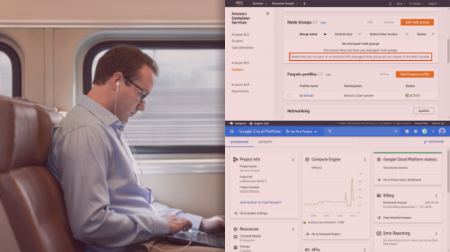
Running your Kubernetes application on a managed service in the cloud can simplify operations, reduce ongoing maintenance costs, and improve performance and stability. In this course, Kubernetes for Developers: Moving to the Cloud, you will gain the ability to deploy a basic Kubernetes app on a managed Kubernetes cluster in the cloud. First, you will learn how to evaluate different cloud options for your application. Next, you will discover how to create a Kubernetes cluster in a managed cloud service. Finally, you will explore how to update your cluster when your application changes. When you are finished with this course, you will have the skills and knowledge to deploy and update a basic Kubernetes app on three major cloud providers – AWS, Azure, and Google Cloud.

More Info