Linux Under The Hood


Linux Under the Hood
MP4 | Video: AVC 1280×720 | Audio: AAC 44KHz 2ch | Duration: 9 Hours | 35.6 GB
Genre: eLearning | Language: English​

Learn all about Linux internals and how Linux really works.

Linux Under the Hoodis a unique video project that focuses on Linux internals, so you can get the most out of the Linux operating system. Although most Linux books and videos explain how to accomplish tasks in Linux, this video course goes beyond the how and dives into the why. So, instead of learning how to use commands and configure services, you will take a look at what’s happening in Linux when you perform tasks. We’ll go deeply into the Linux operating system in a way that is understandable to anyone who has already worked a bit with Linux. There’s no need to be an expert or have a C programming language background; the only thing that is required is a bit of experience with the Linux operating system and a desire to learn really understand it.

This course offers 13 lessons that cover everything the audience needs to know to understand how Linux functions. The approach of this video course emphasizes real concept teaching. A minimal amount of slides will be used, with most videos diving into Linux internals and concepts using white board explanations and command line screencasts.

The video lessons cover the following topics:

Lesson 1: How Linux is organized

Lesson 2: About C code, scripts and compiled programs

Lesson 3: Understanding Linux commands and how they work

Lesson 4: Understanding the Linux boot procedure

Lesson 5: Understanding Linux storage

Lesson 6: Understanding memory management

Lesson 7: Understanding processes

Lesson 8: Security

Lesson 9: Hardware initialization

Lesson 10: Looking closer at the kernel

Lesson 11: Understanding networking

Lesson 12: Performance optimization

Lesson 13: The future of Linux

About the Instructor

Sander van Vugtis an independent Linux trainer, author, and consultant living in the Netherlands. Sander has written numerous books about different Linux-related topics and many articles for Linux publications around the world. Sander has been teaching Red Hat, Ubuntu, SUSE, and LPI Linux classes since 1994. As a consultant, he specializes in Linux High Availability solutions and Performance Optimization. More information about Sander is on his website at www.sandervanvugt.com.

Skill Level

Intermediate to advanced

What You Will Learn

How to work more efficiently with Linux by understanding exactly how it works

RapidGator
Code:Copy to clipboard

https://rapidgator.net/file/0ea95bef1d70d79f8fce0c9c4223c36e/Linux.Under.the.Hood.rar

<—====All Premium====—>
UsersDrive
Code:Copy to clipboard

https://usersdrive.com/eky9wej50znp/Linux.Under.the.Hood.rar

Linux Tmux

Year of release : 2021
Manufacturer : Udemy
Author : Frank Anemaet
Duration : ~33m
Type of material distributed : Video lesson
Language : En
Описание: mux is a terminal multiplexer, it enables a number of terminals to be created, accessed, and controlled from a single terminal. tmux can be used to create "virtual" terminals, allowing applications like vim or irssi to be run in separate terminals within a single window or console. tmux can also be used to allow a single terminal multiple "tabs", with all the terminals under the control of a single tmux "session".
Why learn tmux?
Using tabs and multiple graphical windows gets very annoying when using the Linux terminal. Tmux provides an alternative.
Because of the flexibility it brings to you as Linux user. An entire Linux system can be controlled from one command line (as long as that command line is attached to a tmux session). Files can be edited in vim, emails sent from mutt, and irssi is always there when you need to get some social media postings out.
Example files : not provided
Video format : MP4
Video : AVC, 1280×720, 16:9, 30fps, ~900kbps
Audio : AAC, 48kHz, 128kbps, stereo

⋆🕷- – – – -☽───⛧ ⤝❖⤞ ⛧───☾ – – – -🕷⋆

Linux Tmux (195.9 MB)

Drop Link(s)
Code:Copy to clipboard

https://drop.download/uoqwkzbzpt74/Linux.Tmux.rar

RapidGator Link(s)
Code:Copy to clipboard

https://rapidgator.net/file/1ab6c2a0742b8440d1207782d2dae6cd/Linux.Tmux.rar

Linux Shell Scripting – Basics


MP4 | Video: h264, 1280×720 | Audio: AAC, 44.1 KHz, 2 Ch Genre: eLearning | Language: English | Duration: 19 Lessons (8h 45m) | Size: 2.55 GB​

In this series, Daniel and Don walk you through the fundamentals of bash scripting in the Linux operating system. Watch here as they take you through the fundamentals like: Script file formats, running scripts, working with variables, performing arithmetic, conditional statements, loops, presenting data, taking user input, and script control.

Welcome to – Check it Every Days
If you have any troubles with downloading, PM me

Happy Learning!! Click to expand…

Linux Shell Scripting – Advanced


MP4 | Video: h264, 1920×1080 | Audio: AAC, 44.1 KHz, 2 Ch Genre: eLearning | Language: English | Duration: 17 Lessons (8h 13m) | Size: 7.88 GB​

In this course, take a look at some more advanced scripting practices in Linux by learning about Functions, Libraries, Regular Expressions and more.

Welcome to – Check it Every Days
If you have any troubles with downloading, PM me

Happy Learning!! Click to expand…

Linux Security – Basics and Beyond


Released 4/2024 MP4 | Video: h264, 1280×720 | Audio: AAC, 44.1 KHz, 2 Ch Genre: eLearning | Language: English | Duration: 11h 30m | Size: 3.33 GB​

Table of contents
Introduction
Linux Security – Basics and Beyond: Introduction
Module 1: Linux User Security
Module Introduction
Lesson 1: User Security Basics
Learning objectives
1.1 Introduction to Linux Users
1.2 Principle of Least Privilege
1.3 Accessing the Repository and Network Map
1.4 The id Command
Lesson 2: Working with Passwords
Learning objectives
2.1 Secure Passwords
2.2 Setting the Password
2.3 Generating Passwords with openssl and KeePass
2.4 The passwd and shadow Files
2.5 Password Settings
2.6 Password Policy Configuration
Lesson 3: Linux Authentication
Learning objectives
3.1 Logging in as a Typical User by Password
3.2 Logging in as an Enterprise User
3.3 Locking the System
3.4 SSH Basics
3.5 SSH and Linux in the Cloud
Lesson 4: su, sudo, and sudoers
Learning objectives
4.1 The su command
4.2 Using the sudo command
4.3 sudoers
4.4 Assigning a Regular User sudo Permissions
Module 2: Securing Linux Operating Systems
Module Introduction
Lesson 5: Linux Operating System Security Basics
Learning objectives
5.1 Introduction to Linux OS Security
5.2 Defense in Depth
5.3 The CIA Triad
Lesson 6: Updating Linux
Learning objectives
6.1 Updating Debian and Ubuntu
6.2 More apt and Repositories
6.3 Updating Fedora, Red Hat, and CentOS
6.4 Installing Security Updates Only
6.5 Updating SUSE
6.6 Updating Arch
Lesson 7: Working with Services and System Health
Learning objectives
7.1 systemctl Basics
7.2 Reducing the Attack Surface
7.3 Creating a Degraded System
7.4 Repairing a Degraded System
7.5 systemd states
Lesson 8: Securing Linux Distros
Learning objectives
8.1 10 Steps to a Secure Linux Server (Part I)
8.2 10 Steps to a Secure Linux Server Server (Part II)
8.3 Wired Wireless Security in Linux
8.4 Securing GRUB
Lesson 9: Application Security
Learning objectives
9.1 AppArmor Basics
9.2 AppArmor Profiles
9.3 AppArmor and Apache Example
9.4 SELinux Basics
Module 3: Firewalls and SSH Security
Module Introduction
Lesson 10: Introduction to Firewall Security
Learning objectives
10.1 What is a Firewall?
10.2 Types of Linux-based Firewalls
10.3 Zero-Trust Environment Mindset
Lesson 11: UFW
Learning objectives
11.1 UFW Introduction
11.2 Setting up UFW
11.3 Configuring UFW
Lesson 12: firewalld
Learning objectives
12.1 firewalld Introduction
12.2 Installing and enabling firewalld
12.3 Configuring and Testing firewalld
12.4 Lock it Down!
12.5 Returning the System to its Original State
Lesson 13: nftables
Learning objectives
13.1 Introduction to nftables and the nft command
13.2 nftables Setup
13.3 Tables > Chains > Rules
13.4 Building the nftables Configuration (Part I)
13.5 Building the nftables Configuration (Part II)
13.6 Saving and Restoring the nftables Configurations
13.7 Translating iptables to nftables
Lesson 14: Securing SSH
Learning objectives
14.1 Review of SSH
14.2 Using Keys to connect via SSH
14.3 The sshd_config file
14.4 Modifying the default SSH port
14.5 Disabling Password-based SSH
14.6 Disabling root login via SSH
14.7 Exclusive SSH Groups
14.8 Authentication Settings
14.9 Terminating SSH Connections (Part I)
14.10 Terminating SSH Connections (Part II)
Module 4: Linux File Security and Security Tools
Module Introduction
Lesson 15: Storage Drive Fault Tolerance and Backup
Learning objectives
15.1 RAID 1
15.2 RAID 5
15.3 RAID 10 and ZFS
15.4 Backup!
Lesson 16: Working with Files in Linux
Learning objectives
16.1 chmod
16.2 chown and chgrp
16.3 Encryption in Linux
16.4 Linux Encoding and Hashing
Lesson 17: Working with Processes
Learning objectives
17.1 Viewing Processes
17.2 Ending Processes with Commands
17.3 Ending Processes with top
Lesson 18: Vigilant Logging and Tooling
Learning objectives
18.1 Logging in Linux – The Journal
18.2 Logging in Linux – rsyslog Part I
18.3 Logging in Linux – rsyslog Part II
18.4 Auditing in Linux
18.5 Nmap
18.6 Wireshark
18.7 Additional Tools
Summary
Linux Security – Basics and Beyond: Summary

Welcome to – Check it Every Days
If you have any troubles with downloading, PM me

Happy Learning!!


Linux Process Investigation


Linux Process Investigation
Published 12/2024
MP4 | Video: h264, 1920×1080 | Audio: AAC, 44.1 KHz
Language: English | Size: 203.94 MB | Duration: 0h 31m​

Learn to Analyze Linux Processes and Detect Unusual Activities

What you’ll learn

Understand the roles and behaviors of processes in a Linux environment.

Identify and analyze cron jobs, services, and autostart mechanisms on Linux systems.

Detect suspicious processes and identify potential indicators of compromise.

Gain practical skills in using tools to investigate and troubleshoot process-related issues.

Requirements

Basic understanding of Linux commands and terminal usage is helpful but not required.

No prior knowledge of cybersecurity is needed-beginners are welcome!

Description

Are you ready to master the art of process investigation in Linux? In Linux Process Investigation, you’ll learn the essential skills to effectively analyze, troubleshoot, and understand processes running on Linux systems. Whether you are a cybersecurity enthusiast, IT professional, or just someone interested in Linux internals, this course will guide you through everything you need to know about Linux processes and their impact on system behavior.What You’ll Learn:Understanding Linux Processes: Get a comprehensive overview of how processes work in Linux, including the basics of process management.Cron Jobs and Services: Learn how to identify and analyze cron jobs and services that run on your Linux system, understanding their purpose and behavior.Autostart Mechanisms: Explore how processes are set up to start automatically at boot, and how to track down potential security concerns.Application History: Learn how to investigate app history on your Linux system, allowing you to detect unusual activities and track down issues.Why Take This Course?Linux systems are a critical component of modern IT infrastructure, making it crucial to understand how processes operate, manage resources, and can potentially introduce security threats. By the end of this course, you will be equipped with the knowledge needed to detect suspicious activity and manage processes effectively in a Linux environment.Who Should Enroll?Cybersecurity Professionals: Gain practical insights into identifying suspicious processes and securing Linux systems.IT Administrators: Improve your skills in monitoring and troubleshooting Linux processes to ensure optimal performance and security.Students & Enthusiasts: Learn the fundamentals of Linux process management and gain hands-on experience for your career or personal projects.Course HighlightsHands-On Exercises: Practice with real-world examples to understand Linux processes, cron jobs, services, and autostart programs.Security Focus: Learn how to detect and investigate suspicious processes that could indicate security threats.Step-by-Step Approach: Follow a structured path to mastering Linux process investigation with easy-to-follow lessons.Enroll Now to Master Linux Process InvestigationIf you’re ready to uncover what’s really going on inside your Linux system, this course is the perfect starting point. By enrolling in Linux Process Investigation, you’ll gain the knowledge and skills you need to analyze and manage processes effectively, making your system more secure and efficient.

Overview

Section 1: Introduction

Lecture 1 Intro

Lecture 2 Before you start

Lecture 3 Process

Lecture 4 Cronjob

Lecture 5 Services

Lecture 6 Autostart

Lecture 7 App History

IT professionals and system administrators interested in Linux process management.,Cybersecurity enthusiasts looking to gain insights into process investigation.,Beginners who want to learn practical skills for analyzing Linux systems.

Linux Privilege Escalation Walkthrough


Linux Privilege Escalation Walkthrough
.MP4, AVC, 1920×1080, 30 fps | English, AAC, 2 Ch | 40m | 135 MB
Instructor: John Tear​

In this course, you will analyze sudo/suid configurations, files/directories, cron jobs, configuration files, and user artefacts to uncover misconfigurations that can be abused for elevated access.

What you’ll learn

This walkthrough teaches you how to methodically enumerate a Linux system from an assumed breach and identify common privilege escalation opportunities.

In this course, Linux Privilege Escalation Walkthrough, you will learn how to identify and exploit common Linux privilege escalation weaknesses from an assumed breach scenario.

First, you will first explore enumerating a Linux host for common privilege escalation opportunities, identifying sudo/suid configurations, files/directories, cron jobs, configuration files, and user artifacts that may introduce security weaknesses.

Next, you will discover how common misconfigurations can lead to privilege escalation vulnerabilities. Finally, you will learn how to safely exploit these issues in a controlled lab environment while maintaining a clear, repeatable methodology.

By the end of the course, you will have the skills and knowledge required to reliably escalate privileges on Windows systems and understand how these common weaknesses could be mitigated in real environments.

Homepage

RapidGator
Code:Copy to clipboard

https://rapidgator.net/file/56991f304bffc6af33b33f63447a7acc/Pluralsight.Linux.Privilege.Escalation.Walkthrough.2026.BOOKWAREGETH.rar

DDownload
Code:Copy to clipboard

https://ddownload.com/ha1y6m68ik7s/Pluralsight.Linux.Privilege.Escalation.Walkthrough.2026.BOOKWAREGETH.rar

<—====All Premium====—>
UsersDrive
Code:Copy to clipboard

https://usersdrive.com/9qwf8q00m0j1/Pluralsight.Linux.Privilege.Escalation.Walkthrough.2026.BOOKWAREGETH.rar

Linux NetWorking – Basics and Beyond


Released 2/2024 MP4 | Video: h264, 1280×720 | Audio: AAC, 44.1 KHz, 2 Ch Genre: eLearning | Language: English | Duration: 10h 28m | Size: 3.1 GB​

Table of contents
Introduction
Linux Networking – Basics and Beyond: Introduction
Module 1: Setup and Networking 101
Module introduction
Lesson 1: System Setup
Learning objectives
1.1 Recommended Lab Setup
1.2 Potential Virtualization Systems
1.3 Configuring Linux Virtual Machines
1.4 Configuring NAT
1.5 Using SSH
1.6 Working with the Terminal
1.7 Basic Linux Commands
1.8 Using Text Editors
1.9 Using VSCode
1.10 Accessing the Course Repository
Lesson 2: Computer Networking Basics
Learning objectives
2.1 What is a Computer Network?
2.2 Use Cases for Computer Networks
2.3 Physical versus Virtual Networks
Lesson 3: TCP/IP
Learning objectives
3.1 Introduction to TCP/IP
3.2 Our First Lab: the ip a Command
3.3 Instructor’s Network Map
3.4 CIDR Notation and Netmasks
3.5 What is DHCP?
3.6 What is DNS?
Lesson 4: The OSI Model
Learning objectives
4.1 What is the OSI Model?
4.2 The OSI Layers
4.3 OSI and Linux
4.4 OSI versus the TCP/IP Model
Module 2: Networking Services
Module introduction
Lesson 5: Introduction to Networking Services
Learning objectives
5.1 A Tale of Three Networking Services
5.2 Network Service Example
Lesson 6: The networking Service
Learning objectives
6.1 Introduction to the networking Service
6.2 Exploring the networking Service in Debian Server
6.3 Analyzing the System with the ip a and ip r Commands
6.4 Configuring a Dynamic Address
6.5 The DORA Process
6.6 Configuring a Static Address
6.7 Configuring DNS in Debian Server
6.8 Debian in AWS
Lesson 7: The networkd Service
Learning objectives
7.1 Introduction to systemd and the networkd service
7.2 Analyzing systemd-networkd in Ubuntu
7.3 Analyzing systemd-networkd in Debian
7.4 Using Netplan to Configure a Static IP Configuration
7.5 Examining Dynamic and Wireless IP Configurations
7.6 Additional networkd-based Commands
7.7 DNS in a Debian System Running networkd
7.8 Arch in AWS
Lesson 8: The NetworkManager Service
Learning objectives
8.1 Introduction to the NetworkManager Service
8.2 Analyzing the NetworkManager Service
8.3 Working with NetworkManager Tools
8.4 Using Cockpit
8.5 NetworkManager Configuration Files
8.6 Viewing the NetworkManager Log
Lesson 9: More Networking Services
Learning objectives
9.1 Introduction to the wicked and network Services
9.2 Working with the wicked Service in openSUSE
9.3 Amazon Linux
Module 3: Commands and Configurations
Module introduction
Lesson 10: The ip Command
Learning objectives
10.1 Introduction to the ip Command
10.2 Working with ip link
10.3 Working with ip address
10.4 Advanced ip a
10.5 Network Connection Data
10.6 Working with ip route
Lesson 11: Network Testing Commands
Learning objectives
11.1 Introduction to Network Testing Commands
11.2 ping Basics
11.3 Advanced ping
11.4 traceroute
11.5 whois
11.6 dig and nslookup
11.7 ss
11.8 nmap scanning
Lesson 12: Hostnames and DNS
Learning objectives
12.1 Introduction to Hostnames and DNS
12.2 Configuring a Hostname in the GUI
12.3 Configuring a Hostname in the Terminal
12.4 FQDNs
12.5 Review of DNS
12.6 Configuring DNS in the GUI
12.7 Configuing DNS in the Big Three Networking Services
12.8 Working with the hosts File
Lesson 13: nmcli
Learning objectives
13.1 Introduction to nmcli
13.2 Using nmcli to Analyze Network Connections
13.3 Modifying Static IP Connections with nmcli
13.4 Configuring a DHCP Network Connection with nmcli
13.5 Editing Network Connections with the nmcli Shell
13.6 Scanning Wireless Networks with nmcli
13.7 nmcli Help and Manual Pages
Module 4: Connecting between Hosts with the Command Line
Module introduction
Lesson 14: SSH
Learning objectives
14.1 Introduction to SSH
14.2 Installing and Analyzing SSH on Linux
14.3 Using SSH to Connect to a Remote System
14.4 Analyzing the SSH Connection
14.5 Terminating SSH Connections
14.6 Using SSH Keys Part1
14.7 Using SSH Keys Part2
Lesson 15: SCP and rsync
Learning objectives
15.1 Working with SCP
15.2 Working with rsync
15.3 Advanced rsync
Lesson 16: SFTP More Connectivity Tools
Learning objectives
16.1 SFTP Overview
16.2 Working with SFTP Locally
16.3 Working with SFTP over the Internet
16.4 SMB
16.5 Additional Remote Connectivity Tools
Lesson 17: Additional Networking Tools
Learning objectives
17.1 Working with Additional Networking Tools
17.2 wget
17.3 Create an Apache Web Server
17.4 curl
17.5 NetPerf
17.6 Additional Tools
17.7 Deprecated Tools
17.8 speedtest-cli
Summary
Linux Networking – Basics and Beyond: Summary

Welcome to – Check it Every Days
If you have any troubles with downloading, PM me

Happy Learning!!


Linux Command Line


2.59 GB | 33min 19s | mp4 | 1280X720 | 16:9
Genre:eLearning |Language:English
Files Included :
FileName :001 Terminals and Shells.mp4 | Size: (149.84 MB)
FileName :002 Terminals and Shells Part 2.mp4 | Size: (135.67 MB)
FileName :003 Getting Help.mp4 | Size: (144.78 MB)
FileName :001 Navigating the Filesystem.mp4 | Size: (147.66 MB)
FileName :002 Working with Files.mp4 | Size: (142.41 MB)
FileName :003 Working with Files Part 2.mp4 | Size: (115.39 MB)
FileName :001 Managing Processes.mp4 | Size: (132.12 MB)
FileName :002 Managing Storage.mp4 | Size: (122.27 MB)
FileName :003 Finding Files.mp4 | Size: (109.9 MB)
FileName :004 Other Useful Commands.mp4 | Size: (119.54 MB)
FileName :001 Environment Variables.mp4 | Size: (133.95 MB)
FileName :002 Environment Variables Part 2.mp4 | Size: (98.55 MB)
FileName :003 File Permissions.mp4 | Size: (151.35 MB)
FileName :004 File Systems.mp4 | Size: (139 MB)
FileName :001 Debian Package Management.mp4 | Size: (175.17 MB)
FileName :002 Redhat Package Management.mp4 | Size: (164.98 MB)
FileName :003 Installing from Source.mp4 | Size: (148.99 MB)
FileName :001 vi and vim.mp4 | Size: (132.69 MB)
FileName :002 vi and vim Part 2.mp4 | Size: (86.33 MB)
FileName :003 GNU nano.mp4 | Size: (99.34 MB)]
Screenshot

Linux Command Line Interface and BASH Scripting

Linux Command Line Interface and BASH Scripting

File INFO:
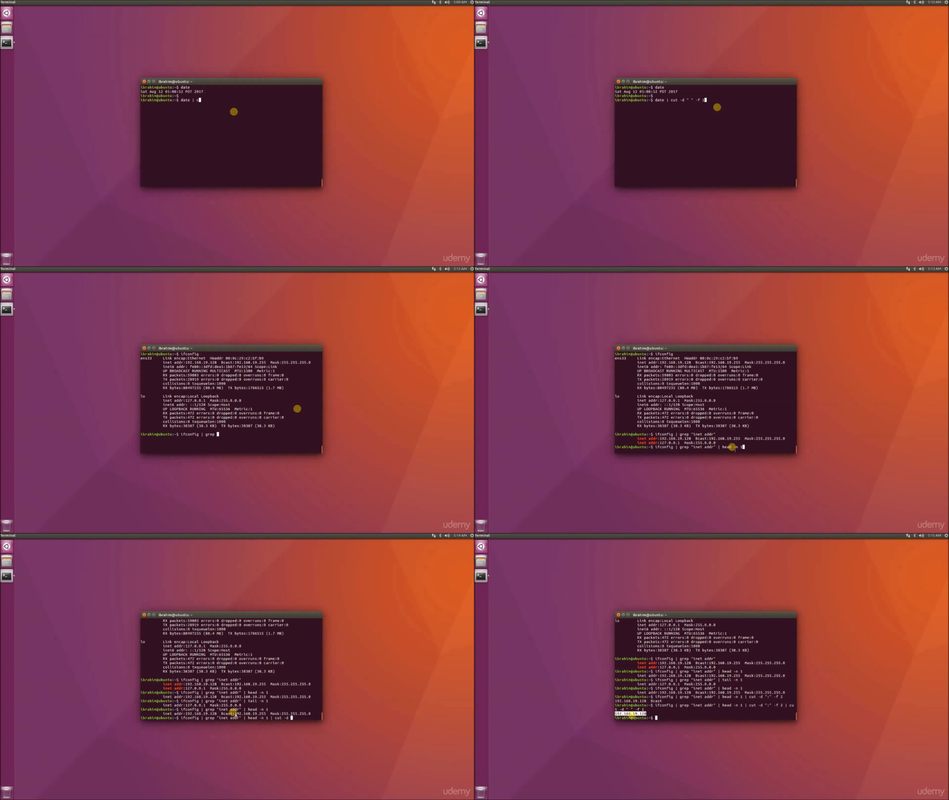
Name: 036 Multiple Pipes
Format:mp4
Size: 361.32 MB
Duration:00:07:33 Click to expand…

Code:Copy to clipboard

https://rapidgator.net/file/5893883fa378862d94d858bbdce0fa47/Linux.Command.Line.Interface.and.BASH.Scripting.rar

Code:Copy to clipboard

https://drop.download/6r0wgqt8bqmu/Linux.Command.Line.Interface.and.BASH.Scripting.rar

– If you enjoy my posts, feel free to leave a "Thanks" in the comments.